
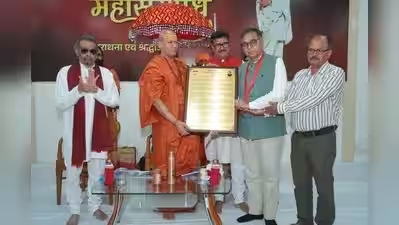
The PAHAR Foundation, a Nainital-based organisation working on Himalayan research, environmental conservation and cultural preservation, has received the Swami Rama Humanitarian Award 2026 from the Himalayan Institute Hospital Trust (HIHT).
The award was presented during the 31st Mahasamadhi Diwas observance of HIHT founder Dr Swami Rama, held on November 13 at the Swami Rama Himalayan University campus in Jolly Grant, Dehradun. The foundation received a cash prize of ₹10 lakh, a citation and a gold medal. Professor Girija Pande and Puran Bisht accepted the award on behalf of the organisation.
Recognising More Than Four Decades of Himalayan Work
Established in 1982, PAHAR (People’s Association for Himalayan Area Research) is an independent voluntary initiative inspired by the Chipko movement and the cultural and social traditions of Uttarakhand.
The organisation works to document and study Himalayan society, nature, environment and culture through scientific and multidisciplinary approaches. Its activities include research, publications, knowledge dissemination and initiatives focused on preserving local traditions and natural resources.
One of its key contributions is its biannual multidisciplinary journal, PAHAR, which has published more than 20 editions. The organisation also produces books, posters and maps to make research on Himalayan history, folk culture and environmental issues accessible to a wider audience.
The foundation has maintained its independence through individual contributions, community support and publication sales.
About the Swami Rama Humanitarian Award
HIHT has been presenting the Swami Rama Humanitarian Award since 2003 to recognise individuals and organisations making significant contributions to humanity in areas including economic development, environmental conservation, science, social welfare and spirituality.
The award is dedicated to the ideals of service and compassion associated with Dr Swami Rama. PAHAR Foundation was selected for its sustained work in Himalayan knowledge, research, literature, cultural heritage preservation, environmental awareness and the welfare of mountain communities.
HIHT Marks 31st Mahasamadhi Diwas
The annual observance brought together institutional representatives, healthcare professionals, academics and other dignitaries to remember the contributions of Dr Swami Rama.
The chief guest, Niranjan Peethadheeshwar Acharya Mahamandaleshwar Kailashanand Giri, paid floral tributes at the Swami Rama Centre and visited an exhibition highlighting the spiritual leader’s life and work.
Addressing the gathering, Giri said Dr Swami Rama had connected spirituality with education, healthcare and humanitarian service. He emphasised that serving society with compassion and dedication was among the most meaningful ways to honour his legacy.
Dr Vijay Dhasmana, president of Swami Rama Himalayan University and a member of HIHT’s Presidential Committee, said the institution continued to work in education, healthcare and social development, guided by Swami Rama’s philosophy of service.
Diabetes Foot Lab Inaugurated at Himalayan Institute
The occasion also marked the inauguration of a Diabetes Foot Lab at the Himalayan Institute of Medical Sciences in Jolly Grant.
The facility will assess foot sensitivity, nerve function and blood circulation to help identify diabetic foot complications, ulcers and infection risks at an early stage.
The institution also announced free diabetes foot screenings on November 14, observed as World Diabetes Day, to encourage early detection and awareness of diabetes-related complications.
Employees Recognised for Institutional Contributions
During the programme, 37 employees were honoured with the Outstanding Employee Awards 2026 across nine categories, covering teaching, research, clinical care, nursing, allied healthcare, administration, office work, support services and cleanliness and green initiatives.
HIHT also released its annual calendar for 2027 as part of the commemorative event.
The recognition of PAHAR Foundation highlights the importance of sustained community-led research, environmental awareness and cultural preservation in the Himalayan region. Its work over more than four decades reflects the role of independent organisations in documenting local knowledge and supporting the long-term conservation of mountain ecosystems and heritage.
Disclaimer: This report has been editorially prepared using publicly available information and official statements. Readers are advised to refer to official announcements for further details.
Author

About the Author