
New Delhi, 25 June: History is filled with stories of great business empires that rose to prominence, transformed industries, and eventually faded with time. Wealth can be created, companies can be built, and market leadership can change hands. Yet only a few individuals leave behind a legacy that transcends business and contributes to the future of humanity and the planet.
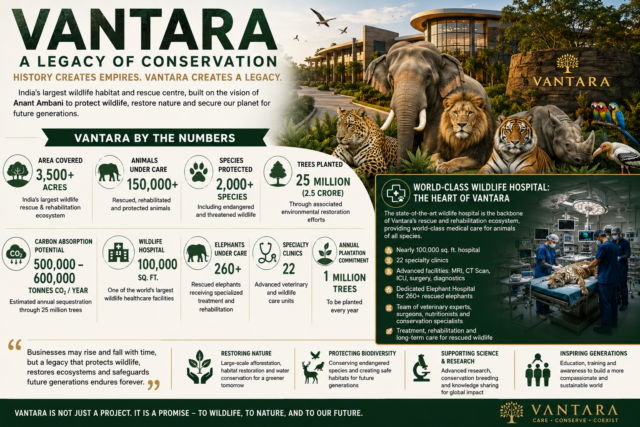
At a time when biodiversity is under unprecedented threat, natural habitats are shrinking, and climate change is becoming one of the defining challenges of our era, Vantara has emerged as one of the world’s most ambitious wildlife conservation and rehabilitation initiatives. Led by Anant Ambani, the project represents a rare example of how private resources can be deployed at an extraordinary scale for the protection of wildlife and the restoration of nature.
India’s Largest Wildlife Habitat and Rescue Centre
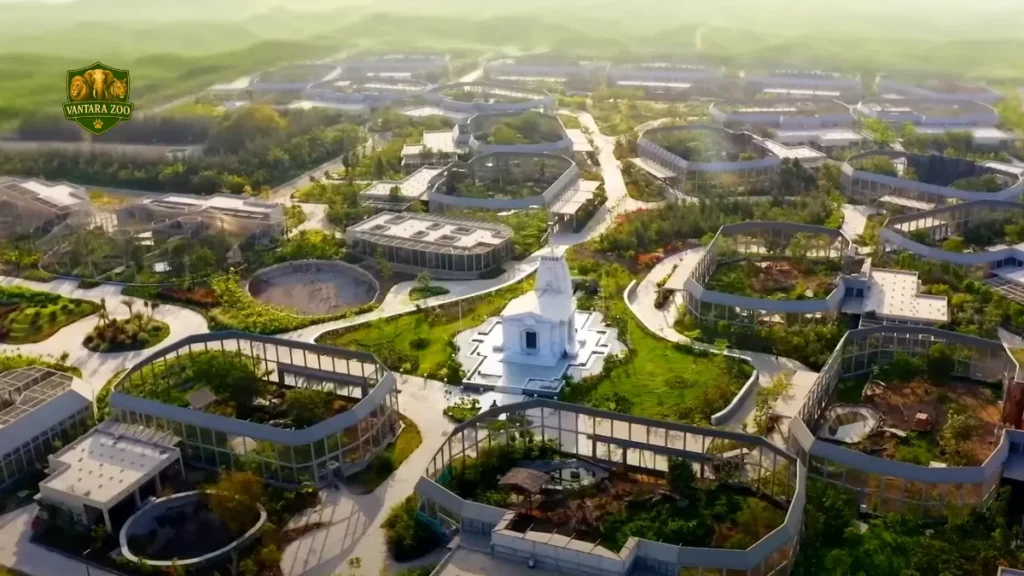
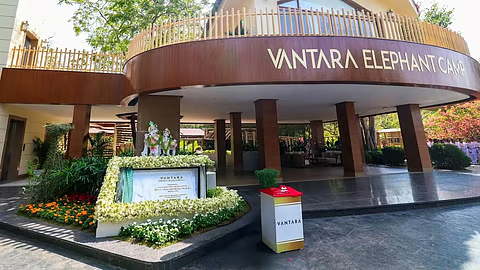
Located in Jamnagar, Gujarat, Vantara spans approximately 3,500 acres, making it one of the largest wildlife rescue, treatment, and rehabilitation centres in the world.
Far more than a conventional zoo or sanctuary, Vantara has been designed as a comprehensive ecosystem for animal welfare. It includes state-of-the-art wildlife hospitals, advanced diagnostic facilities, quarantine centres, research units, rehabilitation zones, and species-specific habitats that closely mimic natural environments.
The scale of the infrastructure reflects a long-term commitment to conservation rather than a short-term philanthropic initiative.
A Safe Haven for More Than 150,000 Animals
Today, Vantara is home to more than 150,000 rescued animals representing over 2,000 species.
Its residents include:
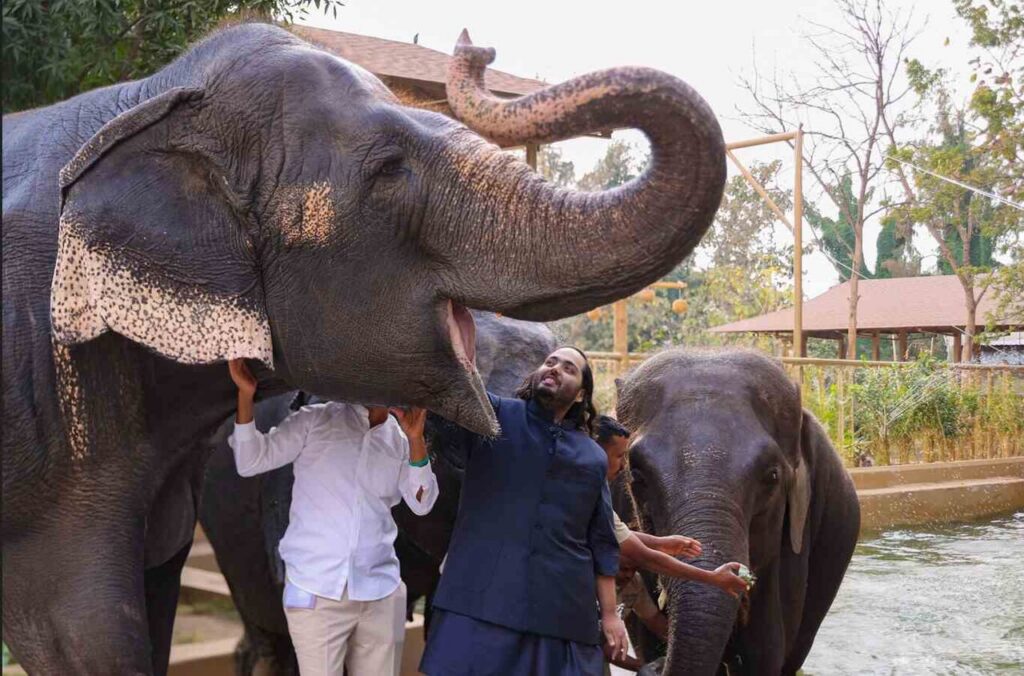
- More than 260 rescued elephants
- Lions, tigers, leopards, and other big cats
- Thousands of birds
- Hundreds of reptiles
- Rare and endangered species
- Animals rescued from illegal trafficking, captivity, abuse, and neglect
Very few wildlife facilities anywhere in the world operate at such scale while focusing primarily on rescue, treatment, rehabilitation, and lifelong care.
For thousands of animals that had suffered exploitation, injury, or abandonment, Vantara has become a second chance at life.
25 Million Trees: A Story of Ecological Restoration
What makes Vantara particularly significant is that its impact extends beyond animal welfare.
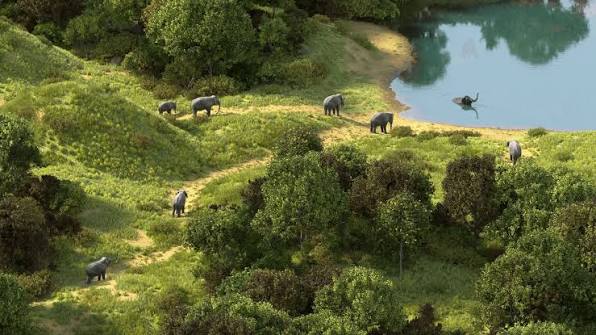
Associated environmental restoration efforts have contributed to the plantation of approximately 25 million trees (2.5 crore), with a commitment to plant one million additional trees every year.
This massive greening effort is helping to:
- Expand green cover
- Restore degraded ecosystems
- Improve biodiversity
- Enhance soil conservation
- Strengthen groundwater recharge
- Create habitats for birds, pollinators, and smaller wildlife species
In an age when deforestation continues to threaten ecosystems worldwide, such large-scale afforestation efforts demonstrate how conservation can be integrated with long-term environmental stewardship.
A Significant Contribution to Reducing Carbon Footprint
Climate change is fundamentally driven by rising greenhouse gas emissions, particularly carbon dioxide.

According to widely accepted forestry estimates, a mature tree can absorb approximately 20–25 kilograms of carbon dioxide annually. Based on this benchmark, 25 million trees have the potential to absorb an estimated 500,000 to 600,000 tonnes of CO₂ every year.
While this is an indicative estimate rather than an officially published figure, it highlights the immense environmental value of large-scale tree plantation and habitat restoration.
The potential carbon sequestration capacity associated with these efforts is comparable to offsetting the annual emissions of a small urban centre, making the initiative relevant not only for wildlife conservation but also for climate resilience.
Protecting More Than 2,000 Species
The world is currently facing what many scientists describe as a biodiversity crisis. Thousands of species are under threat from habitat destruction, poaching, climate change, and human-wildlife conflict.
Vantara’s work addresses these challenges through:
- Wildlife rescue and rehabilitation
- Advanced veterinary care
- Conservation research
- Species recovery programmes
- Capacity building and training
- International conservation collaboration
By providing world-class facilities and scientific expertise, the initiative is contributing to the protection of species that may otherwise struggle to survive in increasingly fragmented ecosystems.
A Legacy Beyond Business
Business success is often measured in revenue, market capitalization, and shareholder value. But history tends to remember those who create lasting value for society.
Factories may close. Products may become obsolete. Even the largest corporations can disappear over time.
Yet an initiative that protects wildlife, restores ecosystems, plants millions of trees, and contributes to the preservation of biodiversity creates a different kind of legacy—one measured not in financial returns but in lives saved and nature restored.
With 3,500 acres dedicated to conservation, more than 150,000 animals under care, over 2,000 species represented, 25 million trees planted, and the potential to help remove hundreds of thousands of tonnes of carbon dioxide from the atmosphere each year, Vantara stands as one of the most significant private-sector conservation initiatives of our time.
History has seen many great business empires rise and fall. But through Vantara, Anant Ambani has created something far more enduring—a legacy rooted in compassion, conservation, and the belief that economic success and environmental responsibility can coexist.
Author
About the Author