India is firmly on course to achieve its ambitious target of 500 GW of installed electricity capacity from non-fossil fuel sources by 2030, the Central Government informed Parliament on Wednesday. Union Minister of State for New and Renewable Energy and Power Shripad Yesso Naik said the country has already crossed a major milestone by achieving 50% installed electricity capacity from non-fossil fuel sources, five years ahead of the original 2030 deadline.
Replying to a question in the Lok Sabha, the Minister highlighted India’s rapid progress in expanding renewable energy infrastructure, calling it a significant step towards strengthening energy security and meeting the country’s climate commitments.
Renewable Energy Capacity Continues to Grow
As of June 30, 2026, India’s total non-fossil fuel-based installed electricity capacity stood at 297.36 GW, while the country’s total renewable energy capacity reached 288.58 GW.
Among renewable energy sources:
- Solar Energy: 162.15 GW
- Wind Energy: 57.44 GW
- Large Hydro Power: 52.06 GW
- Bio Power: 11.75 GW
- Small Hydro Power: 5.18 GW
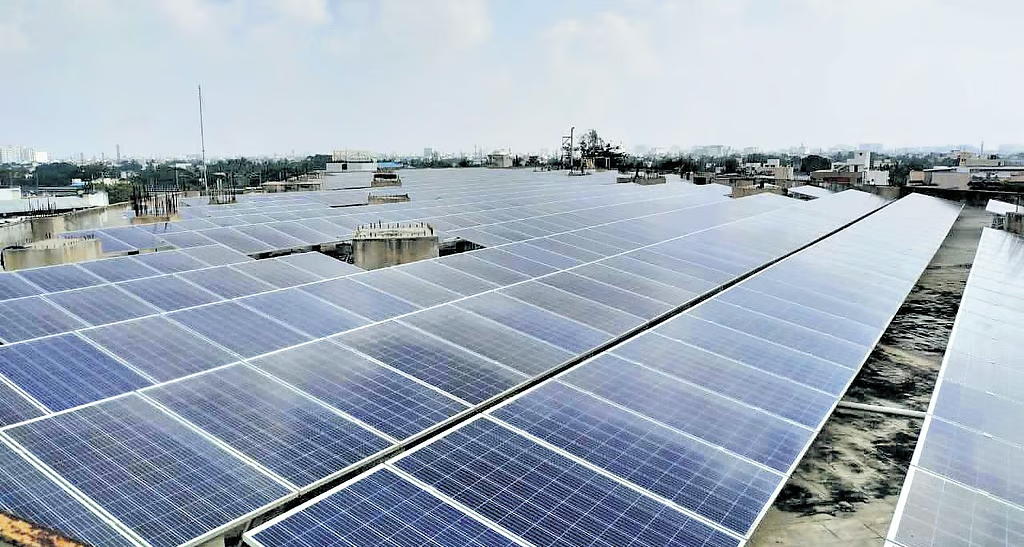
Solar power continues to dominate India’s renewable energy mix, accounting for the largest share of installed capacity.
Record Pace of Renewable Energy Expansion
The government noted that renewable energy additions have accelerated significantly over the past five years.
Annual renewable energy capacity additions have increased from:
- 14,595 MW in 2021-22
- to 54,591 MW in 2025-26
The sharp rise reflects India’s aggressive push to expand clean energy generation through large-scale solar parks, wind projects, hybrid renewable systems, and other green energy initiatives.
Challenges Remain
While highlighting the country’s progress, the Minister acknowledged that several challenges continue to affect renewable energy expansion.
The key issues include:
- Land acquisition for renewable projects
- Transmission infrastructure development
- Grid integration of renewable energy
- Right of Way (RoW) for transmission lines
Since renewable energy generation is often located far from major demand centres, strengthening transmission networks remains critical for efficiently delivering electricity across the country.
Government Measures
To overcome these challenges, the Centre said it is working closely with States and Union Territories on multiple initiatives.
These include:
- Identifying suitable land for renewable projects
- Expanding transmission infrastructure under the Green Energy Corridor Scheme
- Strengthening Renewable Energy Management Centres (REMCs)
- Improving forecasting and grid management systems
The Ministry of Power has also issued guidelines for compensation related to Right of Way (RoW) for transmission lines and has advised states to adopt or modify these guidelines to facilitate faster project implementation.
Towards India’s Clean Energy Future
India has committed to achieving 500 GW of non-fossil fuel electricity capacity by 2030 as part of its climate commitments while also targeting Net Zero emissions by 2070.
With renewable energy capacity expanding at a record pace and supportive government policies driving investments, India continues to emerge as one of the world’s fastest-growing clean energy markets.
The government’s latest update indicates that the country remains well positioned to achieve its long-term renewable energy and energy transition goals while reducing dependence on fossil fuels and strengthening energy security.
Author

About the Author