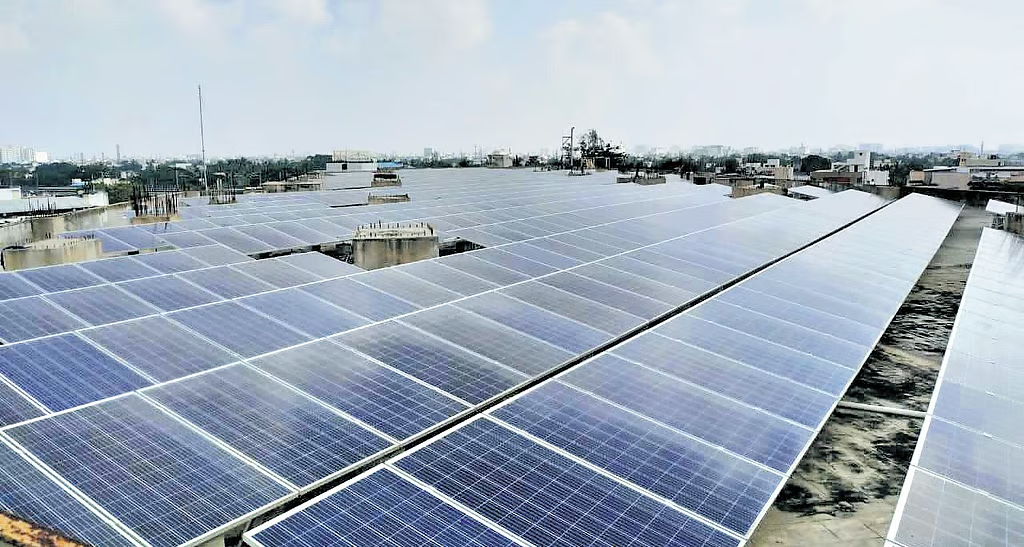
The Goa Government has introduced a new State Subsidy Scheme for rooftop solar installations, aiming to accelerate the adoption of renewable energy across the State and encourage consumers to generate clean electricity from their own rooftops.
The initiative is being implemented through the Goa Energy Development Agency (GEDA) and came into effect on April 1, 2026. The scheme will remain operational until March 31, 2028, subject to its applicable provisions.
The move is expected to provide an additional financial push to households, institutions and businesses considering rooftop solar, while helping Goa reduce its dependence on conventional sources of electricity.
State Subsidy to Come on Top of PM Surya Ghar Support
A key feature of the scheme is that Goa’s subsidy will be available in addition to the Central Financial Assistance (CFA) provided under the Government of India’s PM Surya Ghar: Muft Bijli Yojana.
The State subsidy will be calculated based on the benchmark costs prescribed by the Ministry of New and Renewable Energy (MNRE), along with amendments issued by the ministry from time to time.
This means eligible consumers can potentially combine the central and state-level incentives, making rooftop solar installations more financially attractive.
Who Can Apply?
The scheme covers a wide range of electricity consumers with a Permanent Consumer Account (CA) Number issued by Goa’s Department of Electricity.
Eligible categories include:
- Residential consumers
- Group Housing Societies (GHS)
- Resident Welfare Associations (RWAs)
- Educational institutions
- Commercial establishments
- Industrial establishments
- NGOs
- Other eligible establishments
The broad eligibility criteria could allow rooftop solar adoption to expand beyond individual households and into schools, businesses, housing communities and other institutions.
Goa Pushes Rooftop Solar Adoption
Rooftop solar allows consumers to generate electricity at the point of consumption, potentially reducing their dependence on grid electricity and conventional power sources.
For Goa, the scheme also supports the state’s broader renewable-energy objectives by encouraging distributed clean-energy generation rather than relying entirely on large-scale power projects.
The additional state incentive could particularly help consumers who may have been interested in solar but were hesitant because of the upfront installation cost.
Scheme Valid Until March 2028
The subsidy scheme became effective on April 1, 2026, and is scheduled to remain valid until March 31, 2028.
Eligible consumers are being encouraged to take advantage of the combined financial support available through the State Government and the PM Surya Ghar scheme during the validity period.
With rooftop solar becoming increasingly important in India’s clean-energy expansion, Goa’s new subsidy is aimed at turning more rooftops across the State into small-scale sources of renewable electricity.
Author

About the Author