Greater Noida, August 10, 2026: India’s bioenergy story is entering an important new phase—and Uttar Pradesh finds itself at the centre of it. Just days after the Union Cabinet approved the ₹23,731-crore GOBARdhan National Circular Bioenergy Scheme, Greater Noida is preparing to host the 3rd IBET Expo 2026, an international exhibition and conference dedicated to bioenergy and clean technologies.
The timing creates a powerful convergence between national policy and state-level implementation: New Delhi has put substantial financial and policy weight behind compressed biogas and the circular bioeconomy, while Uttar Pradesh is bringing investors, technology companies, policymakers and industry leaders together to explore the next generation of bioenergy opportunities.
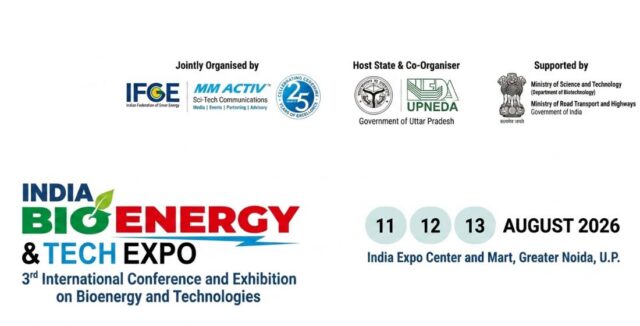
The three-day IBET Expo 2026, scheduled for August 11–13 at India Expo Centre & Mart, Greater Noida, is being jointly organised by the Indian Federation of Green Energy (IFGE) and MM Activ Sci-Tech Communications, with Uttar Pradesh as the host state and UPNEDA as co-organiser.
Its theme—“Advancing Bioenergy Solutions for a Low Carbon World”—could hardly be more relevant at a time when India’s policy focus is shifting from simply generating renewable energy to building a broader circular energy economy.
A ₹23,731-Crore Policy Signal
On August 6, the Union Cabinet approved the GOBARdhan scheme with an outlay of ₹23,731 crore. The programme is designed to accelerate India’s compressed biogas ecosystem by converting agricultural residue, cattle dung, organic municipal waste, press mud and other biomass into CBG and organic manure.
The scheme is planned for FY2026-27 to FY2035-36, making it a decade-long policy push rather than a short-term intervention. Its broader objective is straightforward:
Turn waste into energy, energy into economic value, and economic value into rural prosperity.
The Centre sees CBG as a potential contributor to India’s energy security. According to the government’s backgrounder, India currently meets nearly 50% of its natural-gas requirement through imports, making the development of domestic alternatives strategically important.
And Then Comes IBET Expo
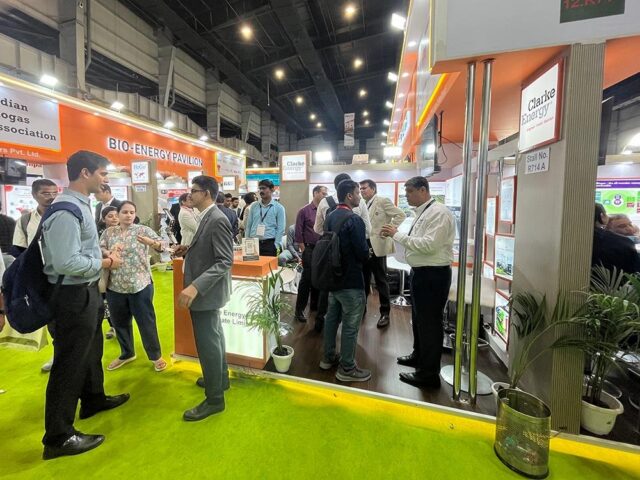
This is where the Greater Noida event becomes particularly significant. The GOBARdhan announcement creates the policy framework. IBET creates the industry platform.
The expo will bring together technologies and businesses across:
- Compressed Biogas
- Ethanol
- Biodiesel
- Waste-to-Energy
- Bio-Mobility
- Biomass pellets and briquettes
- Biomaterials
- Sustainable Aviation Fuel
The conference programme also focuses on issues that will determine whether India’s bioenergy ambitions can become commercially viable—including CBG plant economics, CBG-CGD synchronisation, financing bioenergy, biomass technologies, carbon credits and green certificates.
In other words, the discussion is moving beyond:
“Can we produce bioenergy?”
to the more important question:
“Can we build a commercially sustainable bioenergy industry at scale?”
Why Uttar Pradesh Matters
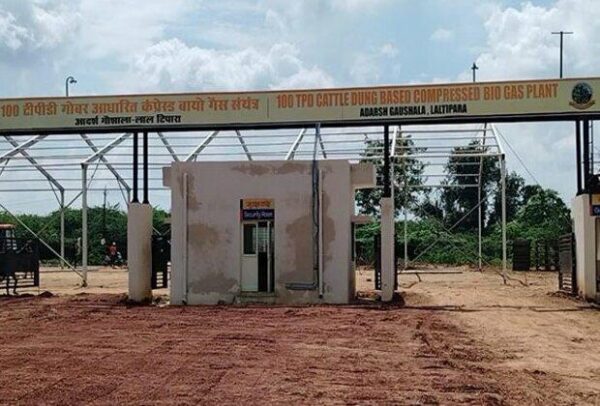
The choice of Uttar Pradesh as host state adds another dimension to the story. UP has a massive agricultural economy and consequently generates significant quantities of agricultural residue. The state government has been positioning bioenergy as an opportunity not only for clean energy but also for investment, technology, waste management and rural economic development.
According to recent reporting on the state’s IBET preparations, Uttar Pradesh generates nearly 17 million tonnes of agricultural residue annually, of which around 5 million tonnes is currently utilised.
That unused biomass represents both a challenge and an opportunity.
If properly collected and processed, agricultural residue can become feedstock for CBG plants, biomass-based energy and other bio-based products.
The equation is therefore particularly attractive for a state like Uttar Pradesh:
Agriculture → Biomass → Processing → Energy → Rural Income
From Stubble to CBG
One of the most important promises of the GOBARdhan model is its potential to change the economics of agricultural waste.
Crop residue has traditionally been treated as a disposal problem in many parts of India. Farmers need to clear their fields quickly, while the absence of viable collection and processing systems can encourage burning.
A functioning bioenergy ecosystem offers another possibility.
Farm residue can become a marketable feedstock.
Farmers and aggregators can earn from biomass.
CBG plants can convert it into renewable gas.
The resulting gas can enter the energy system.
And the residual organic material can potentially return to agriculture as manure.
That is the circular economy in action.
The Investment Story
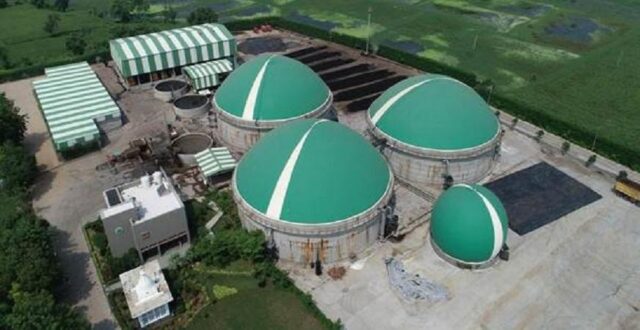
The government’s new scheme is also attempting to address one of the industry’s biggest concerns: project viability. According to the government’s announcement, the scheme includes support mechanisms covering CBG production, feedstock aggregation, organic manure processing and related infrastructure, alongside measures intended to improve financing and market connectivity.
This could create opportunities for several categories of businesses:
Energy Companies
Developing and operating CBG plants.
Technology Companies
Providing anaerobic digestion, purification and gas-compression technologies.
Agri Businesses
Aggregating crop residue and other biomass.
Logistics Companies
Moving feedstock from farms to processing facilities.
Financial Institutions
Funding new bioenergy infrastructure.
Rural Entrepreneurs
Operating aggregation centres and decentralised projects.
Waste Management Companies
Converting municipal organic waste into energy.
The opportunity, therefore, extends far beyond the CBG plant itself.
The Real Challenge: Building the Ecosystem
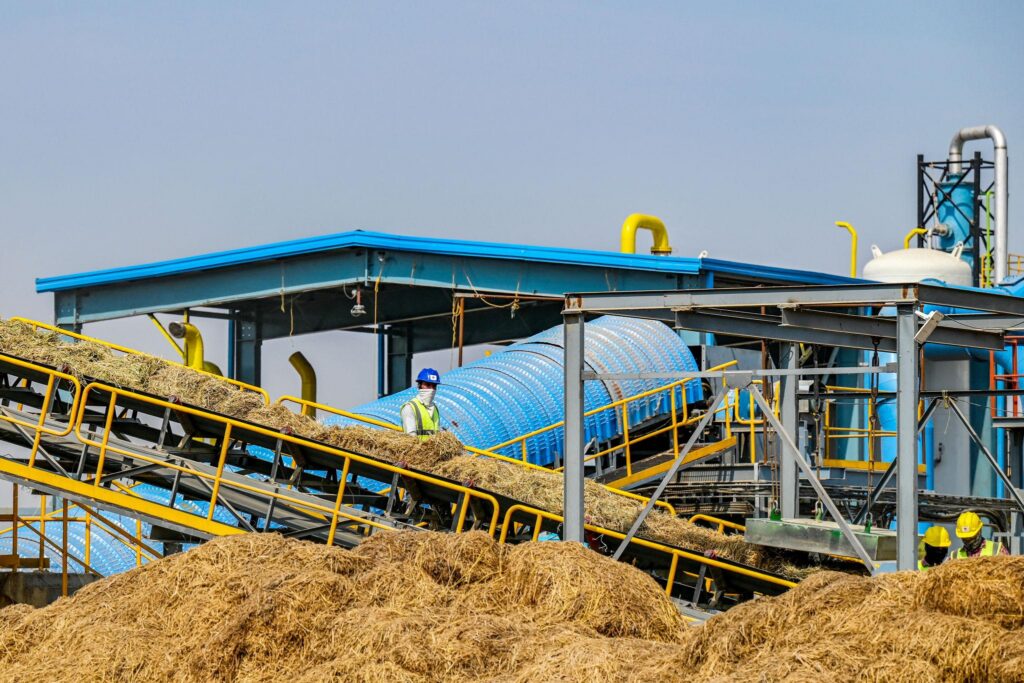
But policy announcements and exhibitions alone cannot create a successful bioenergy industry. The real test will be implementation.
Feedstock must be reliable.
A CBG plant needs a consistent supply of biomass throughout the year.
Logistics must work.
Agricultural residue is scattered across thousands of villages. Collection and transportation can determine whether a project is profitable.
Technology must perform.
Plant efficiency, methane recovery and operational reliability directly affect economics.
Markets must develop.
Producing CBG is only half the story. The gas must have reliable buyers and economically viable distribution channels.
Farmers must benefit.
If the value chain does not create an attractive incentive for farmers and aggregators, feedstock availability could remain a challenge.
These are precisely the kinds of questions that make IBET’s industry discussions important.
A Meeting Point Between Policy and Business
The significance of IBET Expo 2026 lies in its timing. For years, India’s bioenergy sector has developed through individual schemes and initiatives. The new GOBARdhan framework attempts to bring several elements together into a larger national ecosystem.
IBET, meanwhile, offers a physical platform where those policy ambitions can meet:
Technology
Capital
Government
Industry
Entrepreneurs
Investors
That combination could help determine how quickly the sector moves from individual projects to a scalable industry.
Beyond CBG: India’s Wider Bioenergy Opportunity
Although CBG is at the centre of the latest policy push, India’s bioenergy opportunity is considerably broader. IBET’s programme reflects that wider landscape.
Ethanol can support cleaner transportation fuels.
Biomass pellets and briquettes can replace conventional fuels in industrial applications.
Waste-to-energy can address India’s growing urban waste challenge.
Bio-mobility can connect renewable fuels with transportation.
Sustainable Aviation Fuel could eventually contribute to decarbonising one of the hardest sectors to electrify.
Biomaterials can reduce dependence on petroleum-based materials.
The larger story, therefore, is not simply about biogas.
It is about building a bio-based industrial economy.
From Waste Management to Energy Security
There is another reason the GOBARdhan–IBET combination matters. India’s clean-energy transition has traditionally been associated with solar, wind, batteries and electric mobility. Bioenergy adds another dimension. Solar and wind generate electricity.
Bioenergy can provide renewable gaseous and liquid fuels while simultaneously addressing waste and agricultural-residue management.
That makes it particularly relevant to sectors where direct electrification is difficult. The government’s emphasis on CBG is therefore not merely an environmental initiative. It is also an energy-security strategy.
The Opportunity for Rural India
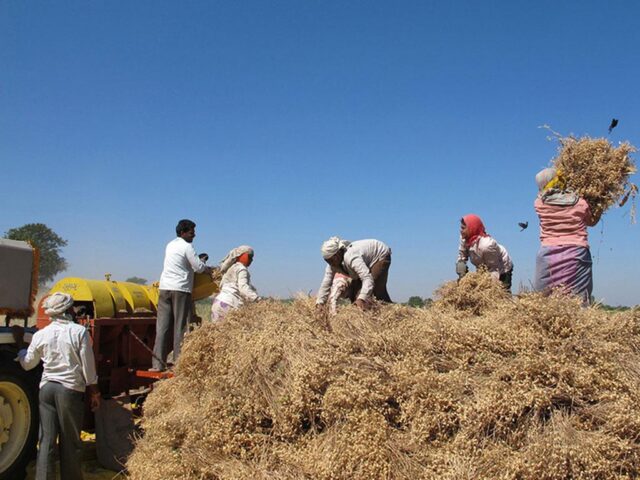
Perhaps the most transformative part of this story could be its impact on rural communities. A CBG plant can create economic activity around an agricultural village without requiring farmers to abandon farming. The farmer can remain a farmer—but agricultural residue can become an additional source of income.
Around the plant, new opportunities can emerge in:
- Biomass collection
- Transportation
- Storage
- Processing
- Plant operations
- Maintenance
- Organic manure
- Rural entrepreneurship
This makes bioenergy potentially much more than a clean-energy intervention. It can become a rural enterprise model.
Uttar Pradesh’s Big Green-Energy Moment
For Uttar Pradesh, the timing offers a significant opportunity. The state is not merely hosting an international exhibition. It is positioning itself as a destination for bioenergy investment, technology partnerships and green industrial development.
With its agricultural base, industrial economy and large consumer market, Uttar Pradesh has many of the ingredients needed to build a substantial bioenergy ecosystem.
The state’s challenge now will be to convert the visibility generated by IBET into actual projects, investment commitments, technology adoption and functioning biomass supply chains.
Author

About the Author