Andhra Pradesh is aiming to establish itself as India’s leading renewable-energy state, with the government positioning wind power, green hydrogen, green ammonia and renewable-powered digital infrastructure at the centre of its long-term development strategy.
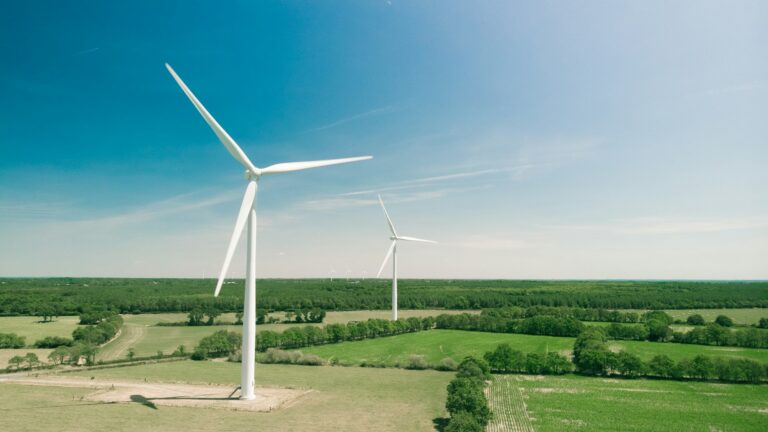
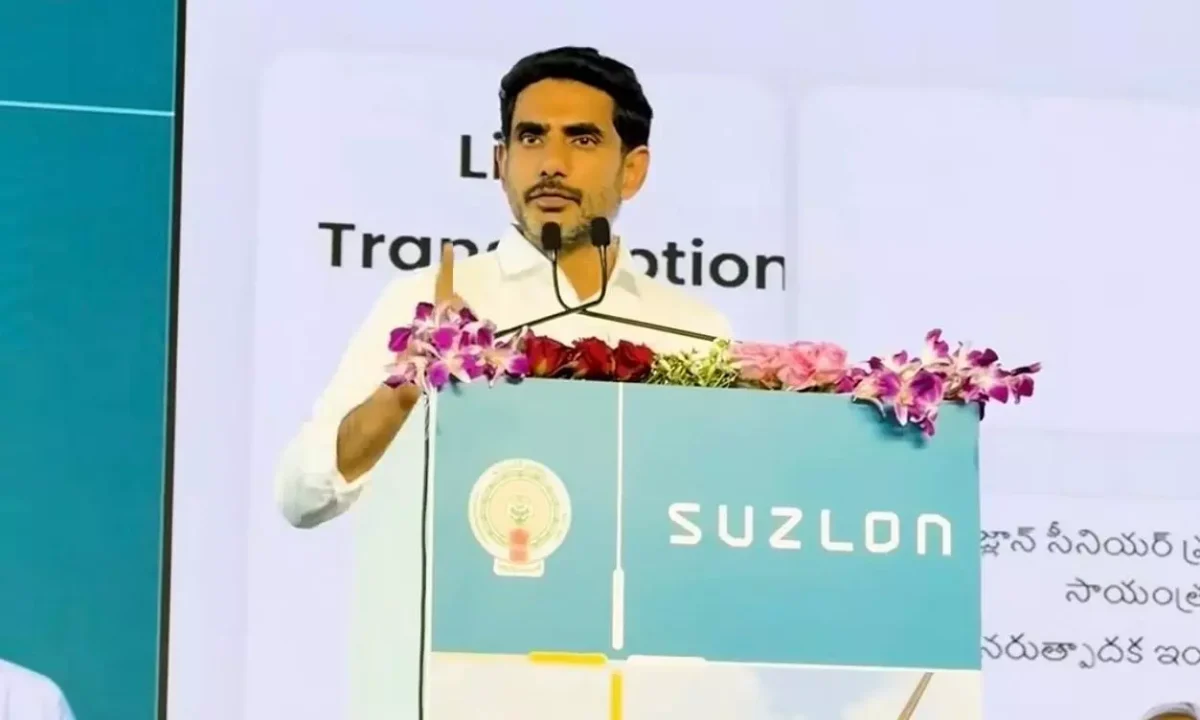
Education and IT Minister Nara Lokesh said Suzlon’s latest wind-energy projects would mark a new chapter in the state’s renewable-energy journey. He made the remarks after laying the foundation stone for Suzlon Wind Energy projects at Huliker in Kanekal mandal of Rayadurg constituency.
Suzlon Projects to Add 1,325 MW
The projects for which the foundation stone was laid are expected to add 1,325 MW of renewable-energy capacity, involving an investment of around ₹10,000 crore.
The projects are also expected to generate more than 4,000 direct and indirect jobs, strengthening employment opportunities linked to the state’s clean-energy sector.
Lokesh highlighted Suzlon’s long-standing relationship with Andhra Pradesh, saying the company’s two-decade association with the state was now being revived.
Suzlon already has around 1,600 MW of installed capacity in Andhra Pradesh, while another 2,700 MW is under construction, according to the minister.
Anantapur Emerging as a Green-Energy Hub
The Anantapur region is becoming an important centre for renewable-energy manufacturing and investment.
Suzlon’s Anantapur facility currently has an annual manufacturing capacity of 1,260 MW and provides direct employment to around 1,200 people, with more than 70% of those employees being local residents.
Across Andhra Pradesh, Suzlon has created more than 2,000 green jobs, further strengthening the state’s clean-energy ecosystem.
Lokesh said the transformation was particularly significant for Anantapur, an area that had historically seen people migrate elsewhere in search of employment but is now attracting major investments and creating local job opportunities.
6.5 GW Data-Centre Capacity Could Drive Renewable Demand
Andhra Pradesh is also planning to develop around 6.5 GW of data-centre capacity.
These facilities will require large amounts of reliable electricity, creating significant opportunities for renewable energy combined with solar, wind and energy-storage systems.
According to Lokesh, the broader data-centre ecosystem could potentially create demand for nearly 25 GW of renewable-energy capacity.
This creates an interesting link between two rapidly expanding sectors: AI and digital infrastructure on one side, and clean energy on the other. As data centres consume increasing amounts of electricity, Andhra Pradesh sees renewable generation and storage as essential to supporting their expansion.
From Renewable Power to Green Hydrogen
The state’s ambition goes beyond simply generating renewable electricity.
Lokesh said Andhra Pradesh’s ultimate goal is to transform the state into a “Saudi Arabia of clean energy” by converting renewable electricity into green hydrogen and green ammonia and eventually exporting these products to global markets.
The state has set a target of 175 GW of renewable-energy capacity, with Suzlon expected to play an important role in achieving that ambition.
The government is also developing 22 industrial clusters focused on sectors including energy, data centres, electronics, pharmaceuticals and automobiles.
12,000 Youths to Be Trained for Green Jobs
To ensure that local communities benefit from the clean-energy expansion, the Andhra Pradesh government and Suzlon will jointly train 12,000 young people for employment in the green-energy sector.
Importantly, 25% of the training opportunities will be reserved for women.
Skill-development centres in Uravakonda and Vijayawada will help prepare workers for jobs across the renewable-energy ecosystem.
The initiative reflects a broader push to connect investment with local employment and skill development rather than limiting the benefits of large renewable projects to infrastructure alone.
Building a Clean-Energy Economy
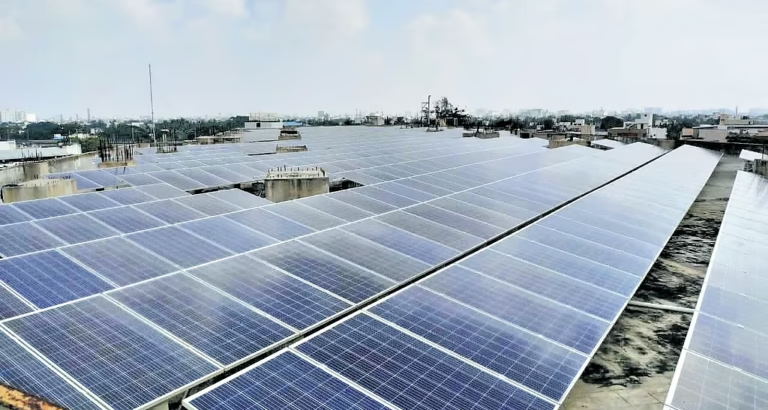
Andhra Pradesh’s strategy is increasingly centred around creating an integrated clean-energy ecosystem—combining wind and solar generation, energy storage, manufacturing, green hydrogen, green ammonia, data centres and industrial development.
If the planned projects move ahead as targeted, the state could significantly expand its renewable-energy footprint while simultaneously creating new manufacturing and employment opportunities.
For Suzlon, the expansion further strengthens its presence in one of India’s major renewable-energy markets. For Andhra Pradesh, the larger ambition is clear: use abundant renewable resources to build an industrial economy around clean energy and become a major player in India’s energy transition.
Author

About the Author