India’s rapid expansion of renewable energy is transforming the country’s power sector, but a new study by the Centre for Science and Environment (CSE) says the transition will require better coordination between renewable sources and the existing coal-based power fleet.
CSE Director General Sunita Narain said India’s challenge is not simply choosing between coal and renewable energy, but finding ways to make the two work together as the country moves towards a cleaner power system.
Coal Flexibilisation Could Support Renewable Growth
According to CSE, India crossed 50% non-fossil-based installed power capacity in November 2025, five years ahead of its original 2030 target.
At the same time, solar capacity has increased around 3.5 times in six years, crossing 160 GW. The rapid growth of solar and wind has created greater variations in electricity generation throughout the day, putting additional pressure on conventional power plants and the grid.
CSE argues that coal flexibilisation can help address this challenge.
In simple terms, it means modifying coal-fired power plants so they can reduce generation when solar and wind output is high and ramp up production when renewable generation falls or electricity demand increases.
Why Flexibility Matters
India’s battery storage capacity remains relatively limited, with around 3 GWh currently operational against a 34.72 GWh target cited by the study.
CSE estimates that without greater flexibility from coal plants, India could require an additional 184.4 GWh of battery storage, potentially increasing system costs.
The study estimates that coal flexibilisation could add around ₹0.272–₹0.457 per kWh to tariffs, depending on the plant’s technology, age and condition.
The organisation argues that this cost could be justified by the flexibility and grid-support benefits provided during the transition.
What Needs to Change?
Coal plants traditionally operate at relatively steady output. Under a more renewable-heavy grid, however, they would need to respond much faster to changes in electricity supply.
This could require:
- Upgrading plant control systems and equipment
- Allowing plants to operate safely at lower loads
- Faster ramp-up and ramp-down capabilities
- Better maintenance and fuel management
- Training operators for flexible operations
- Regulatory and tariff reforms to compensate plants for additional wear and operational costs
CSE has also recommended incentives for plants that successfully meet flexibility targets, including preferential treatment in power dispatch.
Reforming Thermal Power Contracts
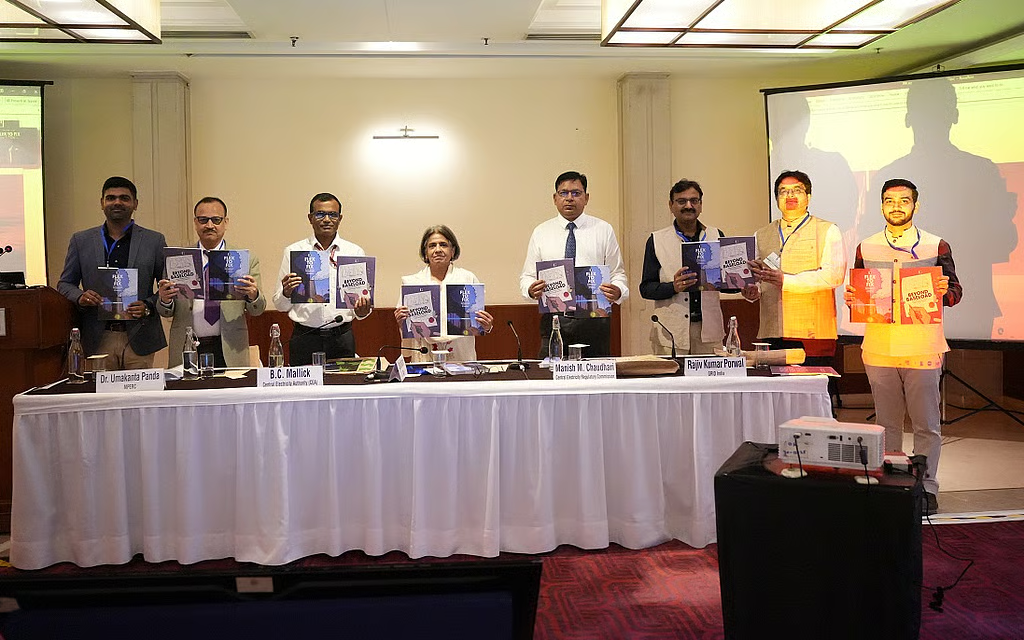
CSE released two reports during its national dialogue in New Delhi: “Flex to Fix: Deciphering India’s Coal Flexibilisation Challenge for RE Integration” and “Beyond Baseload: Reforming Thermal PPAs for India’s Energy Transition.”
The studies call for reforms in thermal power purchase agreements (PPAs) so that conventional power plants can adapt to the changing requirements of a renewable-heavy electricity system.
According to CSE, coal flexibilisation could act as a bridge between India’s current coal-dependent power system and a future grid dominated by renewable energy.
The broader objective is not to keep coal at the centre of India’s long-term energy mix, but to use existing infrastructure more flexibly while renewable capacity, storage and other clean-energy technologies continue to scale.
Author

About the Author