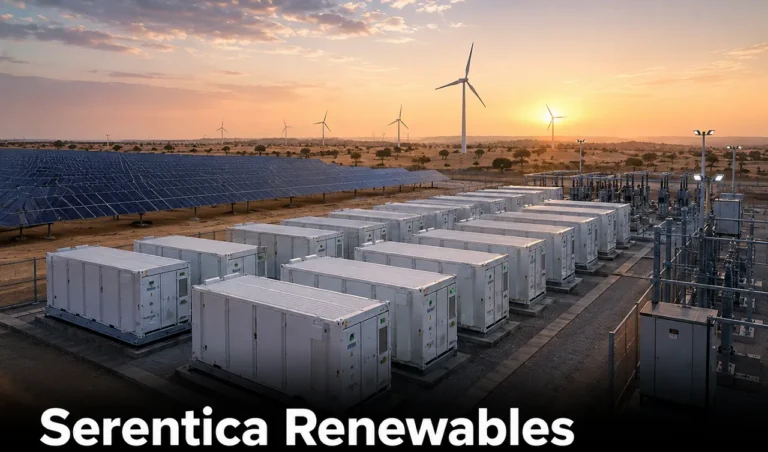
The Central Electricity Regulatory Commission (CERC) has proposed extending the 25-year waiver of Inter-State Transmission System (ISTS) charges for energy storage systems integrated with renewable energy (RE) projects, a move aimed at encouraging greater deployment of battery storage and improving the financial viability of clean energy projects.
The proposal is part of the draft Fifth Amendment to the CERC Sharing of Inter-State Transmission Charges and Losses Regulations, 2026, which has been released for public consultation.
Waiver to Match Renewable Project Life
Under the proposed amendment, energy storage systems that are part of a single renewable energy generation project will receive the ISTS charge waiver for 25 years, matching the operational life of the renewable energy plant.
Currently, the waiver is linked to the operational life of the battery storage system, which is considerably shorter than the lifespan of solar and wind projects.
According to CERC, the revised provision will ensure that storage projects remain financially viable throughout the lifecycle of the associated renewable energy plant.
Commercial Operation Date to Determine Eligibility
The Commission has proposed that where an energy storage system forms part of a renewable energy project, the 25-year waiver will be available from the Commercial Operation Date (COD) of the renewable energy plant.
This change is expected to provide greater certainty for developers planning integrated renewable energy and storage projects.
Green Day-Ahead Market Power to Qualify
CERC has also proposed permitting renewable electricity procured through the Green Day-Ahead Market (G-DAM) on power exchanges to meet the requirement that at least 51% of the electricity used for charging energy storage systems originates from wind or solar sources.
However, the renewable energy mix must be certified by the respective power exchange to ensure compliance with eligibility criteria.
Boost for Renewable Energy Storage
The proposed amendments are expected to support the rapid expansion of battery energy storage systems (BESS), which are becoming increasingly important for balancing renewable energy generation, improving grid stability and enabling round-the-clock clean power supply.
Industry stakeholders can submit comments and suggestions before the draft regulations are finalised by the Commission.
Author

About the Author