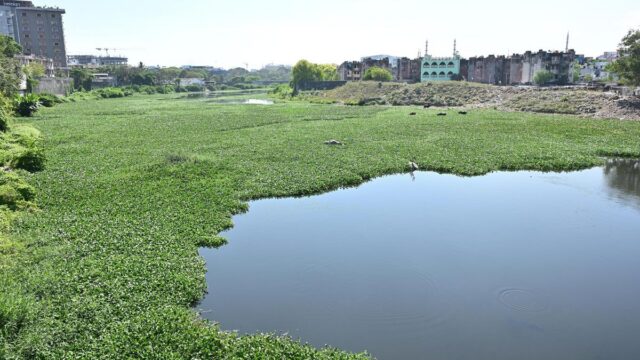
Chennai, 20 June: In a fresh effort to tackle sewage pollution in the Adyar River, the Water Resources Department (WRD) has partnered with non-governmental organisations (NGOs) to establish a modular sewage treatment plant (STP) aimed at intercepting and treating wastewater before it enters the river.
Construction has commenced on a 0.625 million litres per day (MLD) modular STP near the Adyar-Buckingham Canal junction on South Lock Street. The project forms part of broader river rejuvenation efforts designed to improve water quality and restore the ecological health of the Adyar.
The WRD has allocated around 6,000 sq. ft. of land for the facility, while implementation is being carried out by a consortium comprising SIV Impact Inc., CEMCOT, and other partner organisations. The treatment plant will use a combination of Upflow Anaerobic Sludge Blanket (UASB) and Moving Bed Biofilm Reactor (MBBR) technologies, enabling efficient wastewater treatment with minimal sludge generation.
Automated Operations and Sustainable Water Reuse
The proposed STP will feature automated operations monitored through a Supervisory Control and Data Acquisition (SCADA) system, ensuring efficient performance and real-time monitoring.
According to project facilitators, the treated water will be reused for environmental and urban greening initiatives. Reclaimed water will support irrigation of saplings being planted along the Adyar River corridor and maintenance of greenery on medians along Rajiv Gandhi Salai (OMR). A portion of the treated water will also be released into the river to support groundwater recharge.
The project team is additionally exploring opportunities to supply treated water to industries and large residential complexes for non-potable applications such as landscape irrigation and cooling systems, helping reduce dependence on freshwater resources.
₹10-Crore Project Backed by Amazon
The initiative, funded by Amazon with an investment of approximately ₹10 crore, includes provisions for 10 years of operation and maintenance, ensuring long-term sustainability of the project.
Stakeholders believe the Adyar project could serve as a model for similar interventions across Chennai’s urban waterways, including locations such as the Mambalam Drain, helping the city strengthen wastewater management and river restoration efforts.
The latest initiative adds to ongoing efforts by the WRD and Chennai Metropolitan Water Supply and Sewerage Board (CMWSSB) to curb sewage discharge into water bodies and improve the environmental health of Chennai’s river systems.
Author

About the Author


