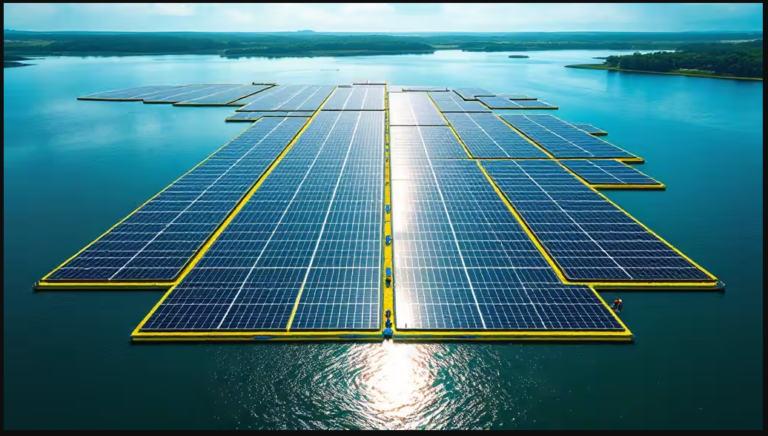

Tata Power Renewable Energy Limited (TPREL) has commissioned a 190.5 MW Solar Firm and Dispatchable Renewable Energy (FDRE) project at Kalasar in Bikaner, Rajasthan, marking another major step in India’s transition towards reliable and large-scale clean energy.
The project has been developed under SJVN FDRE Tranche-1 and forms part of TPREL’s larger 460 MW FDRE project. The renewable power generated will be supplied to Haryana Power Purchase Centre (HPPC), Maharashtra State Electricity Distribution Company Limited (MSEDCL) and Noida Power Company Limited (NPCL).
Solar Power Combined With Energy Storage
Unlike conventional solar projects that generate electricity primarily during daylight hours, the FDRE project is designed to provide more reliable and dispatchable renewable power by integrating large-scale solar generation with energy storage and grid-support technologies.
The project incorporates technologies including Battery Energy Storage Systems (BESS), Harmonic Filter Bank and Static Var Generator systems, helping improve grid stability and power quality.
Engineering Challenges Overcome
TPREL said the project was executed under compressed timelines while the renewable energy industry faced global supply-chain disruptions affecting the availability of transmission-line materials, module mounting structures and other critical equipment.
Despite these challenges, the company completed key infrastructure at an accelerated pace.
The switchyard was completed in just three months, while the Harmonic Filter Bank was completed within one month, highlighting the company’s focus on rapid project execution.
TPREL’s Renewable Portfolio Reaches 12.4 GW
With the commissioning of the project, TPREL’s total renewable utility capacity has reached 12.4 GW.
Of this, approximately 6.9 GW is operational, comprising:
- 5.6 GW of solar capacity
- 1.3 GW of wind capacity
Another 5.5 GW is currently under various stages of implementation and is expected to be commissioned in phases over the next 24 months.
The company currently has a 9.7 GW PPA capacity, while its solar EPC portfolio includes more than 16.7 GWp of ground-mounted utility-scale projects and around 5 GWp of rooftop and distributed ground-mounted projects.
Supporting India’s 500 GW Clean Energy Target
The Rajasthan project comes as India continues to expand renewable generation and energy-storage infrastructure to support its target of achieving 500 GW of non-fossil fuel capacity by 2030.
FDRE projects could become increasingly important as India’s renewable capacity grows because they can help address the intermittent nature of solar and wind power while providing electricity when it is actually needed.
TPREL said the project reflects its commitment to developing innovative clean-energy solutions and supporting India’s broader energy-transition goals.
With its expanding solar, wind, hybrid, storage and EPC portfolio, Tata Power is positioning itself as a major player in India’s rapidly growing clean-energy market.
Author

About the Author