
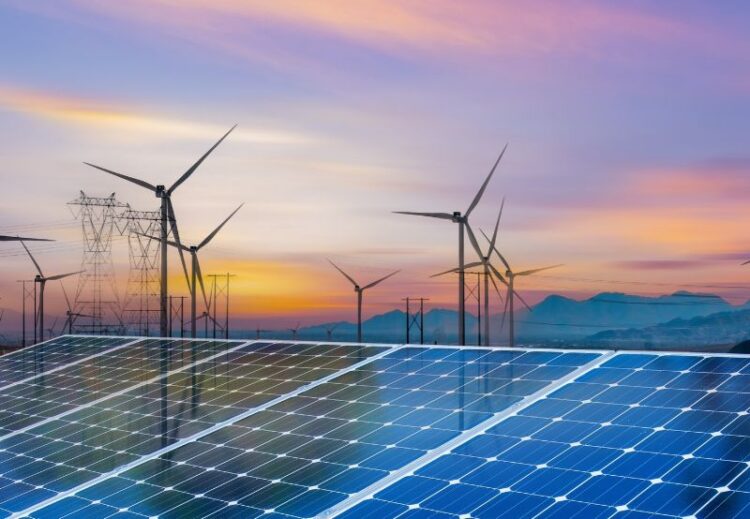
Expanding renewable energy and accelerating electrification across key sectors could help India reduce its dependence on imported fossil fuels and advance its ambition of achieving energy independence by 2047, according to an assessment by the International Energy Agency (IEA).
India’s energy demand is expected to grow faster than that of any other country or region over the coming decade. The IEA’s assessment highlights how renewable electricity, electric mobility, domestic biofuels and emerging clean energy technologies could help meet this growing demand while reducing exposure to international fuel markets.
The findings are part of the IEA’s India Renewable Energy Market Report 2026, which examines the country’s renewable energy progress, future deployment opportunities and the implications for energy security.
Renewable Energy Expansion Strengthens Energy Security
India’s renewable power capacity has almost quadrupled over the past decade, surpassing 300 gigawatts (GW) in 2026. The country has also become the world’s second-fastest-growing renewable energy market and the second-largest manufacturer of solar photovoltaic (PV) modules.
The IEA estimates that renewable electricity generation helped India avoid more than US$100 billion in coal and natural gas import costs between 2011 and 2025.
The impact on coal imports has been particularly significant. Without the solar, wind and bioenergy capacity added since 2010, India’s coal imports in 2025 would have been approximately 110 million tonnes higher.
The agency expects cumulative savings on coal and natural gas imports to more than double by 2030, demonstrating the growing contribution of domestic renewable energy to the country’s energy security.
India also achieved its target of sourcing 50% of installed electricity capacity from non-fossil fuel sources in 2025, five years ahead of its original schedule.
Renewable Capacity Could Reach 530 GW by 2030
The IEA projects India’s renewable power capacity to reach approximately 530 GW by 2030, with solar PV expected to account for more than 80% of new capacity additions.
Solar capacity is forecast to exceed 350 GW, while wind power capacity could approach 90 GW. Hydropower capacity is expected to reach around 75 GW as conventional projects are commissioned and investment in pumped storage increases.
Renewable electricity generation is also expected to rise substantially. The IEA estimates that renewables could provide around 35% of India’s electricity supply by 2030, compared with approximately one-quarter in 2025.
However, achieving this expansion will require more than the construction of new generation facilities. Transmission networks, energy storage and improved grid flexibility will be essential to ensure that electricity generated from variable renewable sources can be delivered reliably to consumers.
Electrification Across Transport and Industry
Electrification is emerging as an important part of India’s strategy to reduce fossil fuel consumption.
In the transport sector, electric vehicles accounted for more than 11% of new vehicle sales in 2026, with India also leading global growth in electric three-wheelers.
The transition towards electric mobility could reduce the country’s reliance on imported petroleum products, particularly as renewable electricity becomes a larger part of the power mix.
The IEA also highlights opportunities to expand electrification in industrial heating. India’s 2026–2031 roadmap for electrifying selected industrial heat applications, alongside biomass support programmes and the Carbon Credit Trading Scheme, could create additional opportunities to reduce fossil fuel consumption in industrial operations.
The expansion of electrification across transport, industry and buildings will therefore play an important role in determining how effectively India can replace imported fossil fuels with domestically generated energy.
Biofuels and Biogas Offer Additional Alternatives to Imports
Domestic biofuel production is another area contributing to India’s energy security.
According to the IEA, India’s liquid biofuel production increased sixfold between 2020 and 2025. Consumption reached approximately 11 billion litres in 2025 and is projected to rise to 16 billion litres by 2030.
The report also highlights the potential of sustainable aviation fuel, with blending targets for international flights scheduled to begin at 1% in 2027 and increase to 5% by 2030.
Compressed biogas is emerging as another potential domestic substitute for imported natural gas. India’s sustainable feedstock resources could support production equivalent to as much as 75 billion cubic metres annually, close to the country’s current natural gas demand.
The IEA notes that natural gas import dependence could rise from 52% in 2024 to approximately 71% by 2030. Scaling up biogas production could help address this exposure by providing an alternative domestic energy source.
Green hydrogen, supported by the National Green Hydrogen Mission, is also expected to offer opportunities to reduce fossil fuel consumption in industrial applications over the longer term.
Domestic Manufacturing Creates New Opportunities
India’s renewable energy expansion is also strengthening its position in global clean energy manufacturing.
Annual solar PV module manufacturing capacity reached approximately 225 GW in September 2026, making India the world’s second-largest manufacturer of solar modules.
The country’s manufacturing base is expected to expand further, supported by industrial policies such as the Production Linked Incentive programme and domestic sourcing requirements.
The IEA also expects India’s wind manufacturing industry to grow, potentially positioning the country as the world’s second-largest wind equipment manufacturer by 2030.
Expanding domestic production could help reduce exposure to concentrated international supply chains, particularly in strategic upstream segments of the solar industry where global dependence on imports from China remains above 95%.
Grid Infrastructure and Storage Remain Major Challenges
Despite rapid renewable energy growth, the IEA identifies several challenges that could constrain the next phase of India’s energy transition.
Solar and wind generation vary according to weather conditions and time of day, increasing the need for transmission infrastructure, battery storage, pumped storage and flexible power generation.
The financial health of electricity distribution companies also remains important for attracting investment and ensuring reliable payments to power producers.
Land acquisition, project approvals and implementation delays are additional concerns, particularly for wind and hydropower developments.
The IEA estimates that addressing these barriers through faster grid development, improved system flexibility, stronger utility finances and streamlined project execution could accelerate renewable power capacity deployment by more than 20% during 2026–2030.
Energy Independence by 2047 Requires a Broader Transition
India’s ambition to achieve energy independence by 2047 will depend on reducing reliance on imported fuels across multiple sectors rather than focusing exclusively on renewable electricity generation.
The IEA’s assessment highlights the combined role of solar and wind power, electric mobility, domestic biofuels, biogas, green hydrogen and industrial electrification in supporting this transition.
The expansion of domestic manufacturing and improvements to electricity infrastructure will also be important for ensuring that the country can meet rising energy demand with affordable and reliable supplies.
As India moves towards its long-term energy goals, the challenge will be to match the pace of renewable energy deployment with the infrastructure, technology and policy reforms needed to make the transition sustainable.
Disclaimer: This report has been editorially prepared using publicly available information and official research. Readers are advised to refer to official International Energy Agency publications and government announcements for further details.
Author

About the Author