
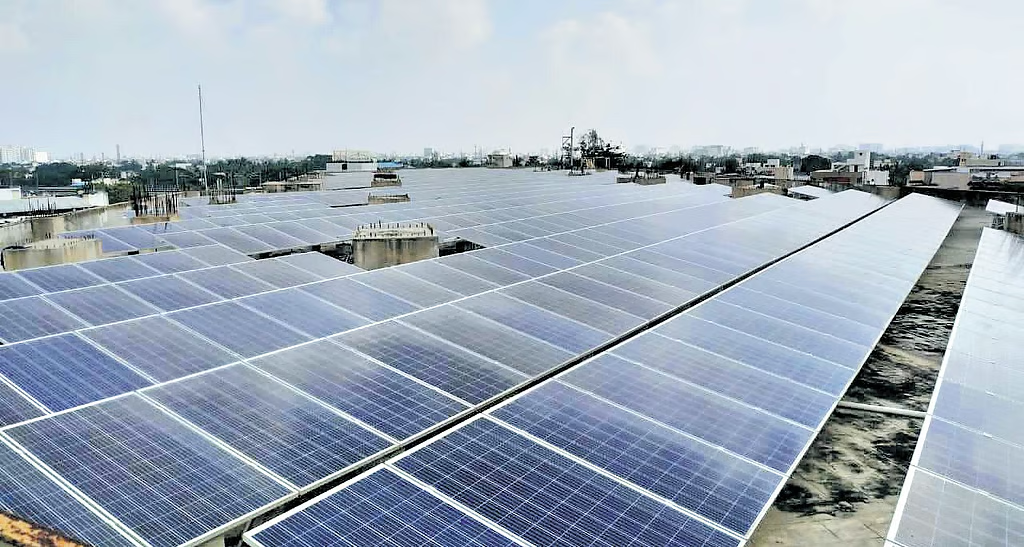
India is currently unable to operate nearly 7% of its installed solar power capacity at full output during peak generation hours due to inadequate transmission infrastructure, highlighting one of the key challenges in the country’s clean energy transition.
The disclosure was made by Minister of State for Power Shripad Yesso Naik in a written reply to Parliament, stating that approximately 12 GW of the country’s installed solar capacity cannot supply electricity to the grid at its maximum potential because of transmission bottlenecks.
Transmission Infrastructure Lagging Behind Renewable Growth
India’s installed solar power capacity has reached around 162 GW, accounting for nearly one-third of the country’s total non-fossil fuel power capacity.
However, during periods of peak solar generation, electricity production often exceeds the carrying capacity of existing transmission lines, forcing grid operators to curtail renewable power generation.
The government noted that these constraints primarily occur during daytime hours when solar plants generate maximum electricity.
Temporary Grid Connections Supporting 21 GW
According to the Ministry of Power, nearly 21 GW of renewable energy capacity is currently connected to the national grid through temporary transmission arrangements while permanent evacuation infrastructure is under construction.
The government attributed the issue to the rapid commissioning of renewable energy projects outpacing the development of dedicated transmission systems required to evacuate electricity efficiently.
Power Losses Increase Amid Bottlenecks
The impact of these infrastructure constraints has become increasingly evident.
India was unable to deliver approximately 8,133 gigawatt-hours (GWh) of solar power to the grid during the April–June 2026 period due to transmission bottlenecks.
This already exceeds the 6,900 GWh of curtailed solar generation recorded during the entire FY 2025–26, indicating growing pressure on the country’s transmission network as renewable energy capacity expands.
Challenge to India’s 500 GW Clean Energy Goal
India currently has around 296 GW of non-fossil fuel power capacity and is working towards achieving its ambitious target of 500 GW of non-fossil fuel capacity by 2030.
While the rapid expansion of solar and other renewable energy projects continues, experts believe that accelerating investments in transmission infrastructure, grid modernisation and energy storage will be critical to ensuring that renewable power can be fully integrated into the electricity network.
Strengthening the national transmission system will be essential for reducing renewable energy curtailment, improving grid reliability and maximising the benefits of India’s growing clean energy capacity.
Author

About the Author