
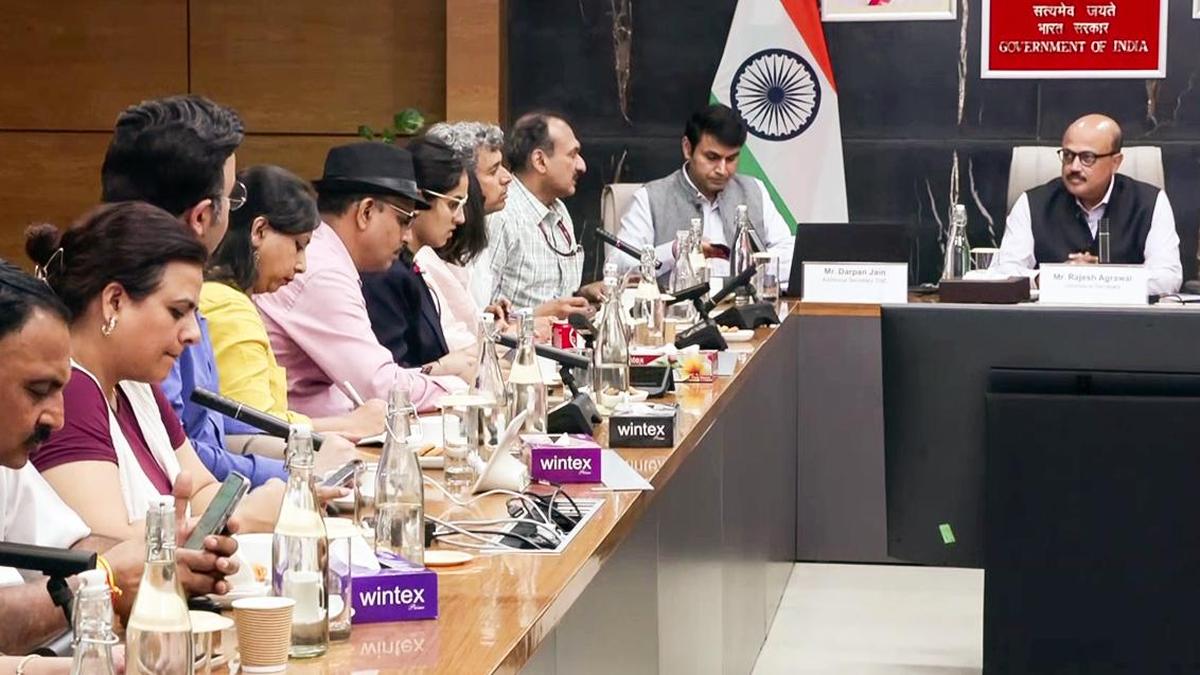
India and the United Kingdom have officially operationalised the India-UK Comprehensive Economic and Trade Agreement (CETA) and the Double Contribution Convention (DCC), marking a historic milestone in bilateral economic relations. Describing it as one of India’s “most ambitious and aspirational” free trade agreements, Commerce Secretary Rajesh Agrawal said the pact establishes a future-ready framework for trade, investment and economic cooperation between two major global economies.
The agreement significantly expands market access for Indian exporters. Under the CETA, the United Kingdom will eliminate tariffs on 96.8% of its tariff lines immediately, covering 97.7% of total trade value. With additional tariff reductions under quota arrangements, the agreement will ultimately provide duty benefits on 98.8% of tariff lines, representing 99.5% of India’s trade value with the UK.
India, in turn, will immediately remove tariffs covering 30.3% of trade value, while an additional 47% will see tariffs phased out over time. Reduced quota-based tariffs will also apply to 12.1% of trade value, taking the agreement’s total coverage to 89.5% of tariff lines and 89.4% of bilateral trade value.
The agreement extends well beyond tariff reductions, covering digital trade, government procurement, innovation, labour, environmental standards, small and medium enterprises (SMEs), and gender-inclusive economic growth. It also includes provisions to address Sanitary and Phytosanitary (SPS) measures and Technical Barriers to Trade (TBT), reducing non-tariff barriers that often hinder international commerce.
According to the government, the deal safeguards India’s sensitive sectors, including dairy, cereals, pulses, vegetables, gold and jewellery, smartphones and critical polymers, while creating new export opportunities across multiple industries.
A key feature of the package is the Double Contribution Convention (DCC), which is expected to provide major relief for Indian professionals working in the United Kingdom. Under the agreement, Indian employees temporarily posted to the UK for up to five years will no longer be required to contribute to both India’s and the UK’s social security systems, eliminating double social security payments.
Officials estimate the DCC will benefit more than 75,000 Indian professionals and over 900 Indian employers, reducing employment costs and improving the competitiveness of Indian companies operating in the UK market.
UK officials have also welcomed the agreement, highlighting its potential to strengthen collaboration in financial services, insurance, fintech, sustainable finance, infrastructure investment and professional services. The deal is expected to deepen economic ties while supporting long-term investment and innovation between the two countries.
The India-UK CETA is regarded as one of India’s most comprehensive trade agreements to date and is expected to boost bilateral trade, create employment opportunities, strengthen supply chains and enhance economic cooperation across multiple sectors.
Disclaimer: This report has been editorially prepared using publicly available information. While every effort has been made to ensure accuracy, unintentional errors or omissions may occur. Readers are encouraged to verify important information through official sources.
Author

About the Author