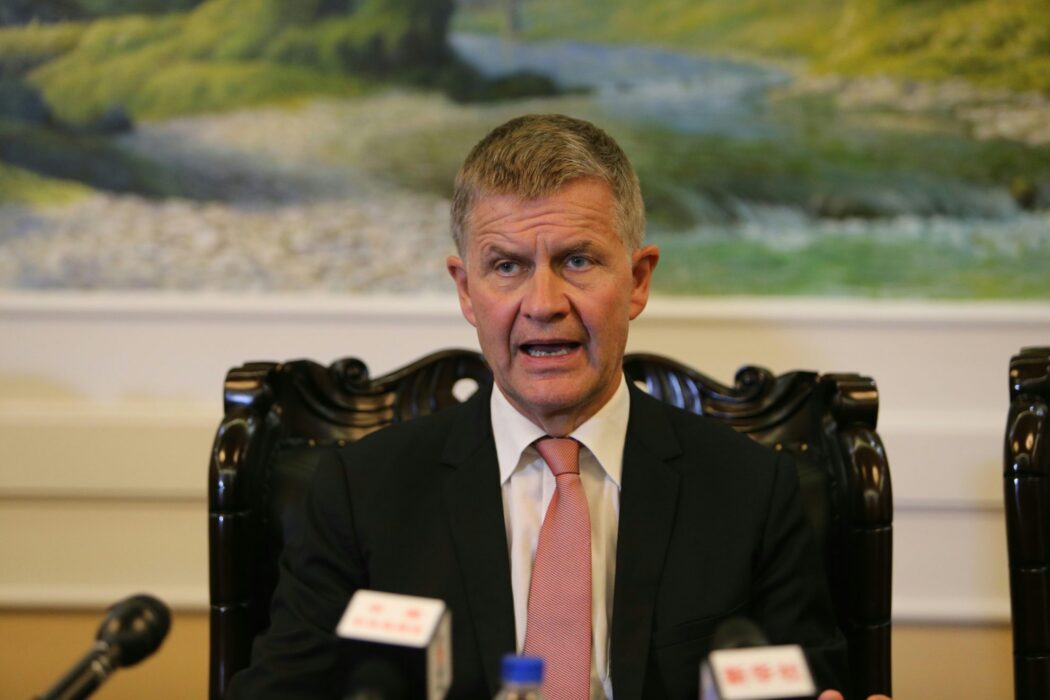
The strategic partnership between India and Norway is entering a new phase with an increased focus on green energy, sustainable shipping and climate cooperation, as both countries look to deepen collaboration in support of global decarbonisation efforts. Highlighting the growing relationship, Erik Solheim, Norway’s former Minister of Climate and Environment, said the partnership represents a practical and scalable model for international climate cooperation built on shared interests and complementary strengths.
In an article discussing the evolving bilateral relationship, Solheim noted that India and Norway possess complementary capabilities that can accelerate the global transition towards a low-carbon economy. While India offers a large and rapidly expanding market with ambitious clean energy targets, Norway brings extensive expertise in renewable energy technologies, sustainable maritime solutions, industrial innovation and long-term financial investment through its sovereign wealth fund.
According to Solheim, at a time when the world faces mounting challenges from climate change, geopolitical uncertainty and slowing international cooperation, the India-Norway partnership demonstrates how nations can work together through strategic collaboration rather than traditional development assistance.
He emphasised that the partnership is centred on sectors expected to define the next phase of global economic growth, including renewable energy, green hydrogen, offshore wind, hydropower and the decarbonisation of the maritime industry.
India has set an ambitious target of achieving 500 GW of non-fossil fuel energy capacity by 2030, while simultaneously expanding investments in green hydrogen, energy storage and other clean technologies as part of its long-term energy transition strategy. Norway, with decades of experience in managing energy resources responsibly and developing advanced renewable technologies, is well-positioned to contribute to these national objectives.
Solheim pointed out that Norwegian companies are already actively participating in India’s renewable energy ecosystem, particularly in sectors such as offshore wind energy, hydropower development and maritime decarbonisation. These areas closely align with India’s growing demand for clean energy infrastructure and sustainable industrial development.
He stressed that the evolving partnership should not be viewed as conventional foreign aid but rather as strategic cooperation based on mutual economic and environmental interests. By combining India’s scale of implementation with Norway’s technological capabilities and financial strength, both countries can accelerate innovation while generating economic opportunities.
One of the key areas identified for future collaboration is green shipping, a sector widely regarded as one of the most challenging industries to decarbonise due to its dependence on fossil fuels and increasing global trade volumes.
Norway has emerged as a global leader in sustainable maritime technologies through the adoption of low-emission vessels, electric ferries, alternative fuels and green port infrastructure. Solheim believes this expertise can complement India’s rapidly expanding maritime economy.
With a coastline stretching over 7,500 kilometres, a network of major ports and steadily increasing international trade, India presents significant opportunities for the deployment of sustainable shipping technologies. The development of green shipping corridors connecting Indian ports with global maritime routes could play a major role in reducing greenhouse gas emissions while promoting cleaner international trade.
According to Solheim, such initiatives would not only strengthen environmental sustainability but also improve the competitiveness of global supply chains by encouraging the adoption of cleaner shipping practices.
The growing cooperation also reflects increasing global recognition that climate partnerships should focus on practical implementation rather than prolonged negotiations over historical responsibilities or financial obligations.
Solheim argued that while international climate discussions often become divided over issues of burden-sharing, the India-Norway partnership offers an alternative model based on shared incentives, collaborative innovation and mutually beneficial investment. Such an approach, he suggested, could serve as an example for future international partnerships addressing climate change.
Beyond renewable energy and shipping, the expanding bilateral relationship is expected to create opportunities in emerging sectors including green hydrogen production, carbon reduction technologies, sustainable infrastructure, clean industrial processes and climate-resilient economic development.
As countries around the world intensify efforts to achieve net-zero emissions and transition towards cleaner energy systems, the strengthening India-Norway partnership highlights the growing importance of international cooperation in advancing sustainable development while supporting long-term economic growth.
The continued collaboration between the two nations is expected to contribute to India’s renewable energy ambitions, strengthen sustainable maritime infrastructure and promote innovative climate solutions that benefit both countries and support global climate action.
Disclaimer: This report has been editorially prepared using publicly available information and official statements. Readers are advised to refer to official government announcements and policy documents for further details.
Author

About the Author