Hyundai Motor India plans to invest an additional ₹4,000 crore in Maharashtra by 2030, with the aim of nearly doubling the annual production capacity of its new Pune manufacturing plant to 3.2 lakh vehicles. The investment will support the company’s manufacturing expansion, localisation efforts and broader growth strategy in India, as the Korean automaker seeks to strengthen its position in the domestic automotive market and expand its exports.
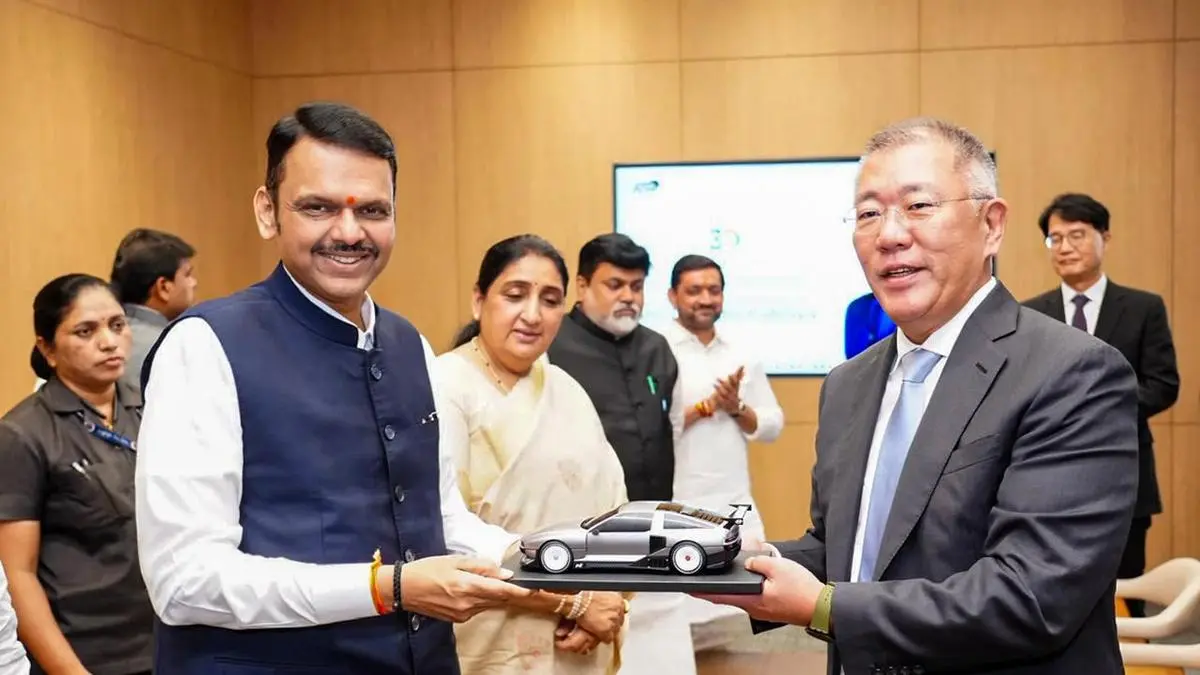
Hyundai Motor India Managing Director and Chief Executive Officer Tarun Garg announced the investment during the inauguration of the Pune facility. The plant, which has already received an investment of ₹7,000 crore, currently has an annual manufacturing capacity of 1.7 lakh vehicles.
The facility was formally inaugurated by Maharashtra Chief Minister Devendra Fadnavis, Deputy Chief Minister Sunetra Pawar and state Transport Minister Uday Samant, alongside senior executives from Hyundai Motor Group. The additional investment is expected to expand the facility’s production capabilities and strengthen Maharashtra’s role in Hyundai’s manufacturing operations.
The announcement follows Hyundai Motor Group’s declaration of a broader investment strategy worth $15.5 billion in India through 2032. The group has identified India as a core strategic market for future growth and expansion, including opportunities to serve emerging markets.
Garg said ₹4,000 crore would be invested directly by Hyundai in Maharashtra as part of the group’s wider investment commitment. He also highlighted the contribution of the company’s supplier ecosystem, noting that vendors associated with Hyundai Motor India had invested an additional ₹4,600 crore in the state.
Pune Plant Expansion to Strengthen Production and Localisation
The planned capacity expansion is part of Hyundai Motor India’s broader manufacturing strategy, with Pune expected to play an increasingly important role in supporting production across its Indian operations.
The company is also targeting an increase in localisation levels from 83% to 92%, aiming to source a greater proportion of components and manufacturing inputs domestically. Higher localisation could strengthen the domestic supplier ecosystem and reduce dependence on imported components, while supporting the development of local automotive manufacturing capabilities.
Garg said Maharashtra’s industrial ecosystem offered opportunities to deepen localisation and strengthen the company’s manufacturing base. The additional capacity is also expected to support Hyundai’s planned product launches and help align production capabilities with its future sales ambitions.
Hyundai Motor India plans to introduce 26 new models as part of its product expansion strategy. According to Garg, the company intends to align the planned launches with additional manufacturing capacity to improve its market position.
The automaker, which previously held the second position in India’s passenger vehicle sales market after Maruti Suzuki, slipped to fourth place in the previous financial year. Expanding production capacity and introducing new models form part of its efforts to regain market share in an increasingly competitive industry.
Hyundai Targets Four Electric Vehicles by 2029
Electric mobility is another major focus of Hyundai’s investment strategy in India. The company plans to introduce four electric vehicle models by 2029 and invest in charging infrastructure to support wider adoption of electric mobility.
Alongside vehicle launches, Hyundai is working to localise more components across the electric vehicle supply chain. Garg said the company was localising battery-pack-related components and had already begun localising power electronics.
Developing domestic capabilities across these areas could support the company’s longer-term electric vehicle plans while strengthening the local supplier base. Investments in charging infrastructure are also intended to support the ecosystem needed for electric vehicle adoption.
The planned EV launches form part of Hyundai’s broader strategy to expand its sustainable mobility portfolio and respond to changing consumer demand and automotive technology trends.
Hybrid Vehicles and Sustainable Mobility Portfolio
Hyundai is also planning to expand its hybrid vehicle offerings as it works towards making 50% of its portfolio sustainable by 2030. The strategy reflects the company’s intention to pursue multiple powertrain technologies while developing its electric vehicle business.
Hybrid vehicles are expected to form part of this transition alongside battery electric vehicles and other technologies. By broadening its sustainable mobility portfolio, Hyundai aims to offer customers more options while adapting to evolving market requirements.
The company’s investments in localisation, electric mobility and hybrid technologies are expected to complement the planned expansion of its manufacturing footprint in Maharashtra.
Export Growth Remains a Strategic Priority
Hyundai Motor India is also looking to increase exports from the country. Garg noted that the company had reached the milestone of exporting four million vehicles from India, establishing a significant manufacturing and export base.
Despite reaching the milestone, the company intends to expand its export volumes further. Additional production capacity at Pune, combined with new model launches and deeper localisation, could support its efforts to serve overseas markets.
The export strategy is aligned with Hyundai Motor Group’s wider investment plans for India, which position the country as a key manufacturing and growth centre. The company’s domestic operations are expected to benefit from investments in production infrastructure, supplier development and new vehicle technologies.
With an additional ₹4,000 crore earmarked for Maharashtra, Hyundai Motor India is seeking to expand Pune’s manufacturing capacity to 3.2 lakh vehicles annually by 2030. The investment, alongside plans for 26 new models, four EVs by 2029 and higher localisation, represents a multi-pronged effort to strengthen the company’s manufacturing base, improve its competitive position and expand its role in India’s automotive and export markets.
Disclaimer: This report has been editorially prepared using publicly available information and official company disclosures. Readers are advised to refer to official company announcements/disclosures for further details.
Author

About the Author