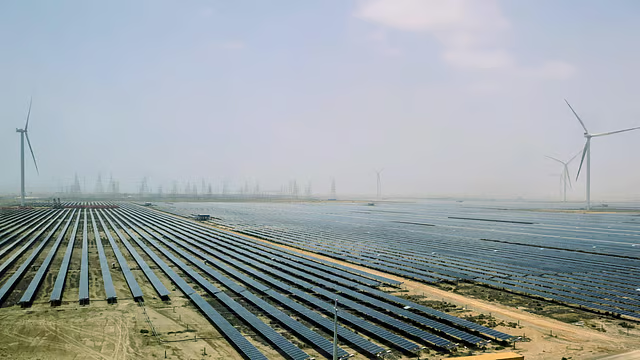
Khavda, 15 June: Nestled near India’s western border in Gujarat’s Kutch district, Khavda has long been known for its harsh climate, sparse population, and vast stretches of barren land. The region, characterized by strong winds, high solar irradiation, and limited agricultural activity, has historically relied on livestock-based livelihoods. However, over the past few years, Khavda has emerged as the focal point of one of India’s most ambitious renewable energy initiatives, attracting significant public and private investment aimed at harnessing its natural energy potential.
The transformation is being driven by the Gujarat Hybrid Renewable Energy Park, a large-scale project spread across thousands of hectares and designed to combine solar and wind power generation. Several major energy companies, including public and private sector developers, are building renewable energy capacity in the region, supported by transmission infrastructure, battery storage systems, and grid connectivity projects. The initiative aligns with India’s broader clean energy goals and is expected to contribute significantly to the country’s renewable power capacity over the coming decade.
Beyond energy generation, the project is reshaping the local landscape through the development of roads, communication networks, worker housing, and other supporting infrastructure. While proponents view Khavda as a model for sustainable energy-led growth and economic development, the scale of the transformation has also sparked discussions around environmental management, land use, and long-term community impact. As construction continues and new facilities come online, Khavda is increasingly being seen as a key test case for India’s transition toward a low-carbon energy future.
Author

About the Author


