
New Delhi, 5 July: India’s financial inclusion journey has achieved remarkable progress over the past decade. Bank account ownership among women has risen significantly, with over 55% of Pradhan Mantri Jan Dhan Yojana (PMJDY) accounts held by women as of August 2025.
As of 2025, around 16 crore women are active borrowers in the formal credit ecosystem. Women’s credit penetration has increased from 19% in 2017 to 36% in 2025, and they now account for nearly 26% of India’s formal credit portfolio (approximately ₹76 lakh crore, a 4.8-fold increase since 2017).
These figures reflect not only wider access but also growing confidence in women as borrowers. However, as development practitioners, we confront a deeper question: Does access translate into agency? As Amartya Sen argues in Development as Freedom, development consists of “the removal of various types of unfreedoms that leave people with little choice and little opportunity of exercising their reasoned agency.” Financial inclusion, therefore, cannot be reduced to account ownership or basic credit access. It must be evaluated by the extent to which it expands women’s real choices, capabilities, and control over resources.
At Manjari Foundation, this question has guided our work with alternative, community-centred credit systems. Through our partnership with Rang De, a peer-to-peer (P2P) lending platform, we have tested whether thoughtfully designed credit—rooted in community institutions and supported by capacity-building—can strengthen women’s economic agency. Since 2022, this collaboration has facilitated over 1,857 loans, channelling ₹9.39 crore into rural economies. Many borrowers were first-time entrants to formal finance, demonstrating that accessible, responsive systems can draw in previously excluded women and support their shift toward enterprise-oriented credit. From Access to Productive Participation and Progression.
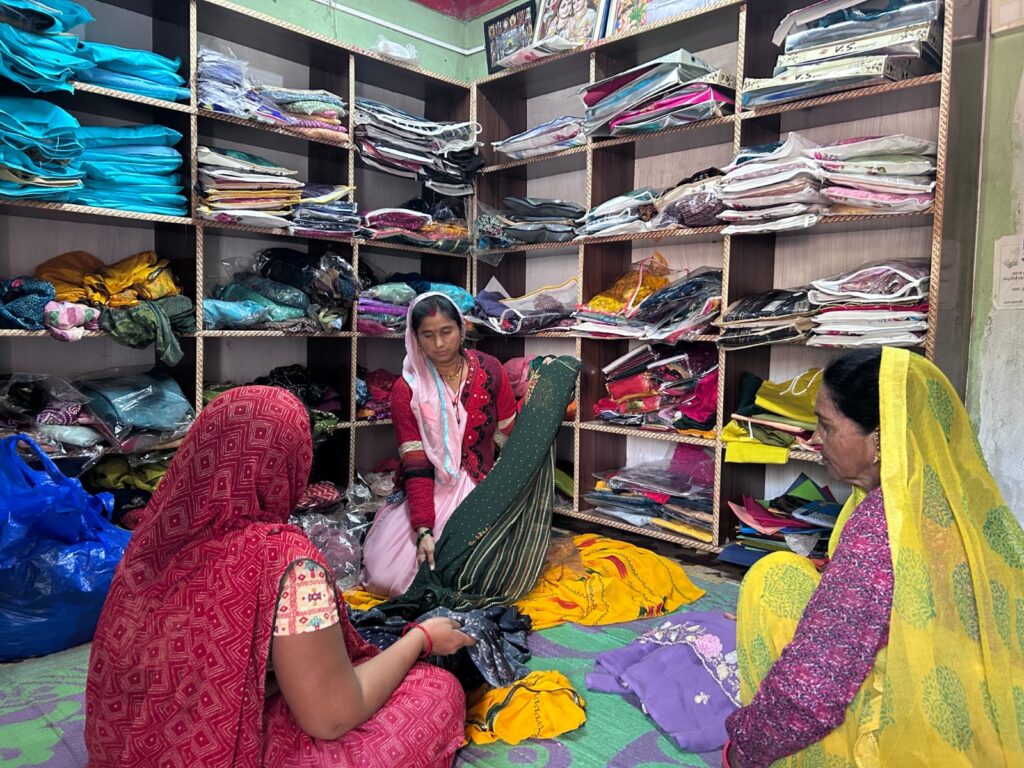
A key insight from our experience is the gradual shift from mere access to active participation and progression within the formal financial ecosystem. Foundational elements like bank accounts, Self-Help Groups (SHGs), and digital identities (e.g., Aadhaar) have created a strong base. Their value multiplies when women use them productively—for livelihoods, income stabilization, and asset-building—in regions with strong community institutions. Naila Kabeer’s distinction in Reversed Realities is instructive: access to resources does not automatically confer control over them.
Our field observations confirm this. Credit proves more effective when aligned with women’s livelihood cycles and delivered through trusted local structures. Flexible, Collateral-Free Design and Digital Public Infrastructure Product design is critical. The P2P model offers flexibility through customized loan sizes, tailored repayment schedules aligned with agricultural or seasonal cycles, and moratorium periods. Loans are extended without collateral, addressing a major barrier for women who often lack formal assets. This provides a dignified alternative to informal moneylenders charging 36–48% annual interest. India’s Digital Public Infrastructure (DPI)—including Aadhaar-enabled e-KYC, UPI, DigiLocker, video KYC, and paperless processes—has dramatically lowered entry barriers, enabling faster verification and disbursement. Digital payments also generate verifiable financial footprints, supporting a shift from collateral-based to data-driven underwriting. Importantly, consistent repayment helps women build CIBIL credit scores, overcoming a previous major hindrance and opening doors to larger institutional finance over time.
Integrated Support: Credit Plus Ecosystem Approach
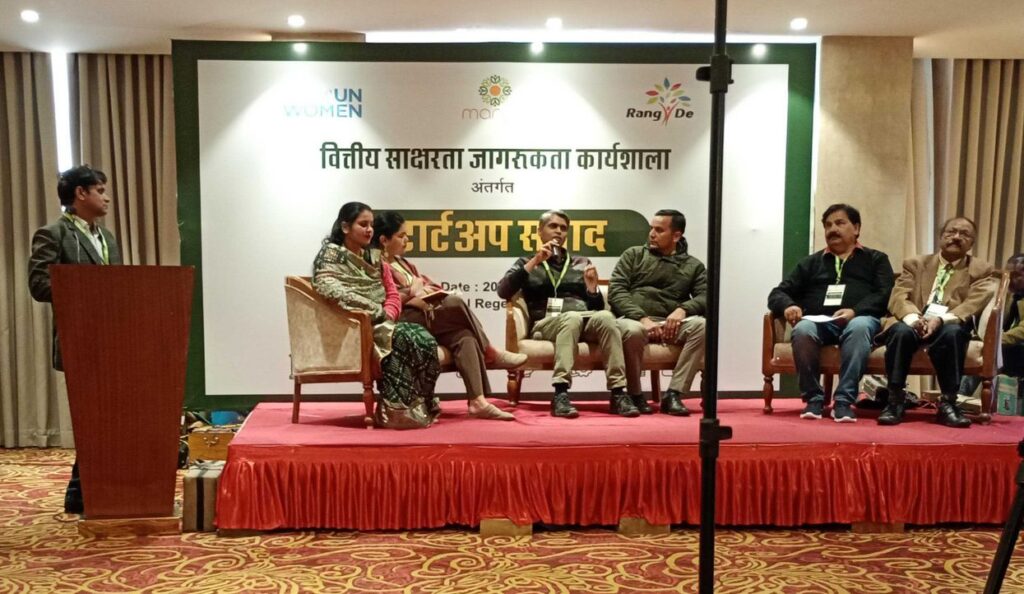
In November 2024, our partnership with UN Women expanded this work, targeting support for 2,500 women entrepreneurs through ₹10 crore in credit via Rang De. By December 2025, the programme exceeded targets, disbursing ₹11.88 crore to 2,619 women across 20 states and 111 districts.
A standout feature was linking micro-grants to financial behaviour, effectively creating pathways to more disciplined behaviour. Structured financial literacy training, with pre- and post-assessments, complemented credit access. Enterprise Development Programme (EDP) support has been equally vital, covering business planning, financial management, basic bookkeeping, cash flow management, costing, pricing, and marketing. In the absence of such an ecosystem, repayment and enterprise success rates can vary significantly. Through these efforts, we have trained over 2,200 individuals and identified more than 500 potential entrepreneurs. As Muhammad Yunus emphasizes in Banker to the Poor, “Credit is a human right.” Yet, our experience shows that credit becomes transformative only when paired with capabilities, knowledge, and behavioural change.
Challenges and Realities on the Ground
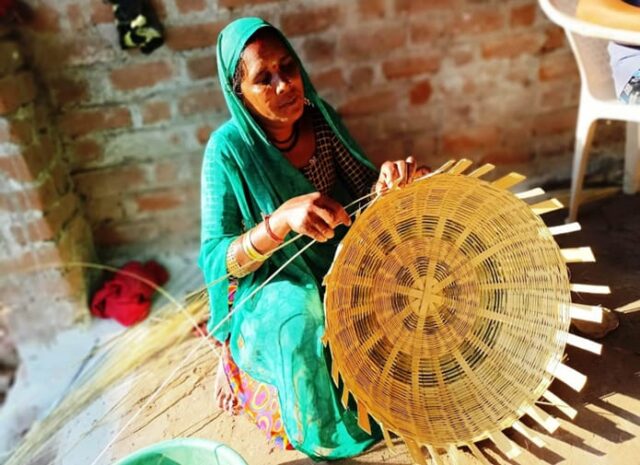
Progress is not linear. External shocks—business losses, health crises, family issues, or seasonal migration—can disrupt repayment. Cases in Datia and Lalitpur illustrate this: one borrower recovered a non-performing asset through family support and persistence; another remained unresolved due to migration. These highlight the need for patient, flexible lender engagement, family involvement, and adaptive products that account for income volatility, mobility, and climate risks.
Gender norms pose another layer of complexity. Even when loans are in women’s names, intra-household decision-making power may remain limited. As Esther Duflo and Abhijit Banerjee note in Poor Economics, economic lives are complex because people are complex. Financial inclusion must therefore pair with efforts to shift social norms, household dynamics, and agency.
Graduation to larger retail or commercial credit remains uneven. Nationally, around 19% of microfinance borrowers have progressed, but many rural women still face barriers despite demonstrated creditworthiness. Stronger policy support and institutional reforms are needed to bridge this gap.
Key Learnings and the Path Forward
Credit functions best within a broader ecosystem. Business-purpose lending to women has been one of the fastest-growing segments, with portfolios rising substantially since 2017, reflecting entrepreneurial confidence.
Sustained success requires market linkages, mentoring, business development services, risk mitigation, and support for climate-vulnerable livelihoods. Digital access alone does not ensure empowerment; trust, peer networks, and collectives remain essential for consistent adoption. Our journey underscores that financial inclusion is about enabling progression—from first-time borrowers to confident entrepreneurs, from access to visibility and control, and ultimately from inclusion to genuine agency. Strong community institutions, digital capabilities, supportive ecosystems, and women’s aspirations are what determine long-term outcomes. Moving forward, priorities include deepening financial and digital literacy, enhancing financial visibility through credit history building, strengthening women-led institutions, and advocating for more inclusive, gender-responsive financial products. By combining innovative credit models with holistic support, we can help unlock resilient, inclusive, and prosperous communities.
This has been a journey of continuous learning—one that reveals both the transformative potential and the inherent limitations of credit-led approaches when implemented in isolation. True empowerment emerges when finance serves as a bridge to broader capabilities and choices.
Authors

About the Author



Access से Agency तक का ये सफर प्रेरणादायक और महत्वपूर्ण बन जाता है. जब क्रेडिट सिस्टम समुदाय केंद्रित होता है . इससे महिलाएं सिर्फ लाभार्थी नहीं, बदलाव की अगुवा बनती हैं. यही असली बदलाव है. Community-Centred Credit Systems के जरिए जब महिलाएं सिर्फ कर्जदार नहीं, बल्कि समूह की लीडर, निर्णयकर्ता और भरोसे का केंद्र बनती हैं, तब पैसा सिर्फ जेब में नहीं आता – सोच, सम्मान और आत्मनिर्भरता भी आती है.Financial Inclusion का मतलब सिर्फ Loan देना नहीं, भरोसा देना है।वित्तीय समावेशिता की असली जीत यही है.
अच्छा लेख, लेखकों को बधाई