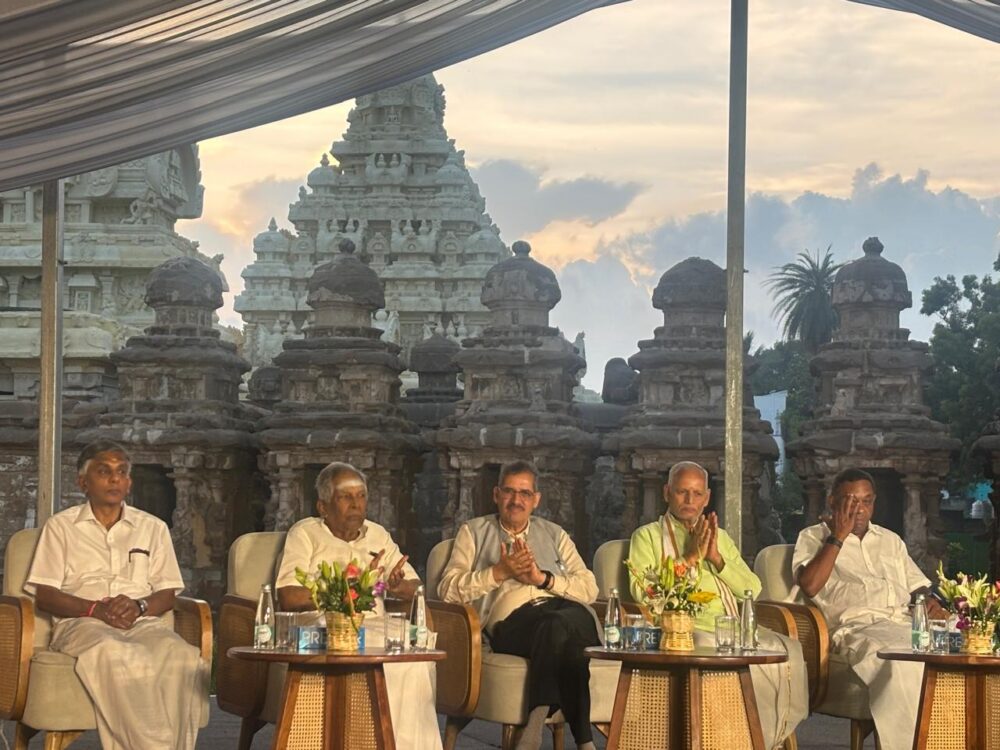
Cholamandalam Investment and Finance Company Limited, in collaboration with the Archaeological Survey of India (ASI) under the Ministry of Culture, has completed a heritage development project at Kanchipuram’s historic Kailasanathar Temple in Tamil Nadu. The initiative focuses on improving visitor amenities, accessibility and access to information about the monument’s history and architectural significance.
The project marks an important milestone under the Government of India’s Adopt a Heritage 2.0 programme, with Kailasanathar Temple becoming the first temple in Tamil Nadu to be adopted under the initiative. It brings together heritage preservation, visitor facilities, interpretation, landscaping and ongoing maintenance to create a more informative and accessible experience for visitors.
A Historic Pallava-Era Monument
Built in the early 8th century by Pallava King Narasimhavarman II, popularly known as Rajasimha, Kailasanathar Temple is among the oldest and most significant temples in Kanchipuram.
The monument is renowned for its distinctive sandstone architecture, 58 subsidiary shrines, intricate sculptures, surviving mural paintings and Pallava inscriptions. It represents an important chapter in the evolution of South Indian temple architecture and reflects the artistic achievements of the Pallava period.
The project aims to help visitors better understand this historical and cultural significance while encouraging greater appreciation of the monument’s architectural features and the importance of preserving them for future generations.
New Interpretation Centre to Enrich Visitor Experience
A key component of the project is the development of a new Interpretation Centre, designed to explain the temple’s history, architecture and cultural importance through an engaging visitor experience.
The centre is intended to serve as a bridge between the monument and its visitors, making historical information more accessible and helping people understand the stories behind its architectural and artistic features.
Alongside the centre, the initiative includes accessibility improvements, enhanced visitor amenities, landscaping and ongoing maintenance. Together, these measures seek to make visits more organised, comfortable and informative while supporting the preservation of the heritage site.
Chola Leadership Highlights Importance of Heritage Preservation
Vellayan Subbiah, Executive Chairman of Cholamandalam Investment and Finance Company Limited, said heritage preservation becomes meaningful when future generations can experience, understand and value what they have inherited.
He described Kailasanathar Temple as an important expression of India’s architectural and cultural legacy and said the project seeks to support its preservation while making its history and significance more accessible. He also highlighted the role of the new Interpretation Centre in bringing the monument’s story to life for visitors.
Ravindra Kumar Kundu, Managing Director and CEO of Cholamandalam Investment and Finance Company Limited, said the initiative demonstrates how corporate participation can complement government-led conservation efforts. He noted that the completed project establishes a precedent for future public-private partnerships aimed at preserving and promoting India’s cultural heritage.
Adopt a Heritage 2.0 Encourages Private Participation
The Government of India’s Adopt a Heritage 2.0 programme provides a framework for private and public sector organisations, NGOs, trusts and other institutions to contribute to improving visitor facilities at protected monuments of national importance.
Under the programme, corporate partners can support the development and upkeep of visitor amenities, while conservation responsibilities remain with the Archaeological Survey of India.
The Kailasanathar Temple project demonstrates how such partnerships can combine heritage preservation with improved access to historical information and visitor facilities.
Chola’s Sanrakshanam Initiative Supports Cultural Heritage
Through the project, Chola has reaffirmed its commitment to preserving and promoting India’s cultural heritage under its Sanrakshanam initiative.
For more than a decade, the initiative has supported cultural restoration and the revival of traditional arts and crafts. The Kailasanathar Temple project extends this focus by combining the preservation of a historic monument with improvements designed to make its cultural significance more accessible to visitors.
The completed initiative highlights the role of corporate partnerships in supporting heritage conservation and responsible tourism. By connecting historical preservation with interpretation and visitor amenities, the collaboration between Chola and ASI seeks to help safeguard one of Kanchipuram’s important architectural landmarks for future generations.
Disclaimer: This report has been editorially prepared using publicly available information and official company disclosures. Readers are advised to refer to official company announcements and disclosures for further details.
Author

About the Author