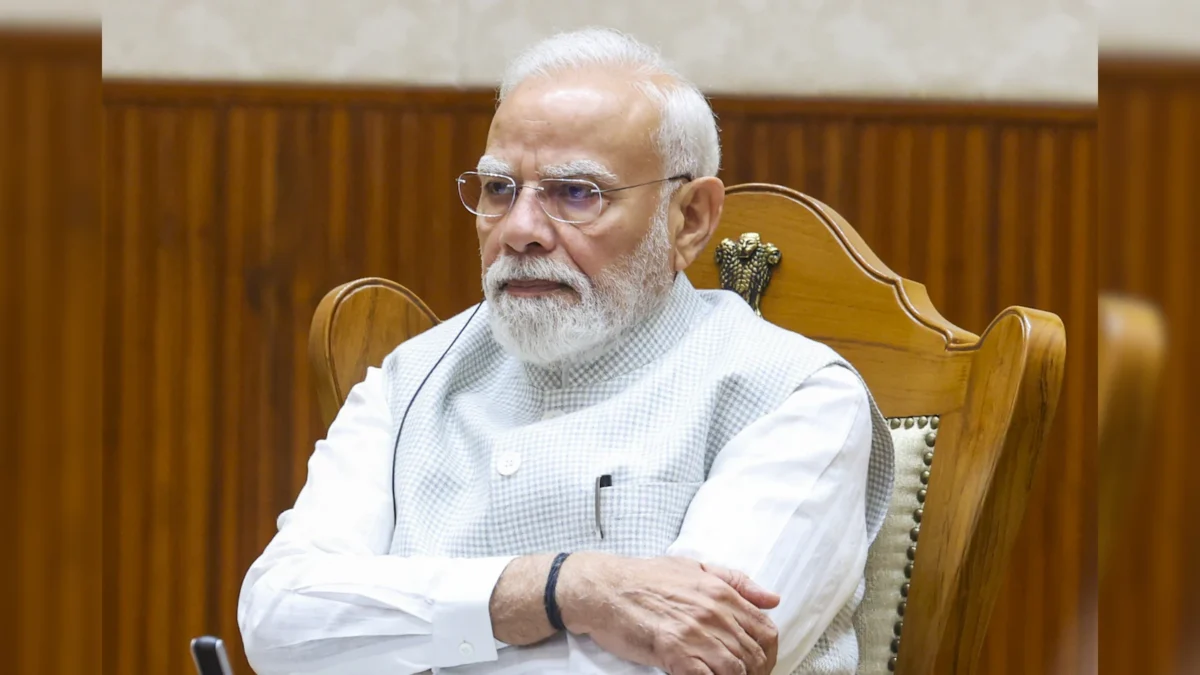
India’s solar energy capacity has expanded dramatically over the past 12 years, rising from around 2 GW to more than 160 GW, Prime Minister Narendra Modi said while addressing the International Conference on “The Future of Environment and Climate Dynamics” in New Delhi on September 19. The address highlighted the expansion of solar power alongside wind, hydropower, nuclear energy, rooftop solar, solar pumps and electric mobility.
The Prime Minister said renewable energy has been a major component of India’s environmental and climate-related efforts, pointing to the rapid expansion of clean-energy infrastructure and the adoption of technologies aimed at improving energy efficiency.
Government data provides a more specific snapshot of the solar expansion: installed solar capacity stood at 164.59 GW as of July 31, 2026, compared with around 2.8 GW in 2014. Solar has consequently become the largest component of India’s renewable-energy capacity.
Solar Capacity Rises More Than 50-Fold
Highlighting the scale of India’s solar expansion, Modi said the country’s solar capacity had grown from approximately 2 GW 12 years ago to more than 160 GW.
The latest government data puts installed capacity at 164.59 GW as of July 31, while more recent sector reporting places the figure at around 168 GW by August 2026. The difference reflects the reporting dates and subsequent capacity additions.
The growth has come through a combination of large utility-scale solar projects, rooftop installations, solar parks and decentralised applications such as solar pumps.
India’s solar sector has also expanded its manufacturing base, with domestic solar-cell and module production becoming an increasingly important component of the country’s renewable-energy strategy.
PM Surya Ghar Crosses 50 Lakh Households
A major part of the government’s distributed-solar push has been the PM Surya Ghar: Muft Bijli Yojana, launched in February 2024 with an overall outlay of ₹75,021 crore and a target of supporting rooftop solar installations for one crore households.
According to government data, 51.58 lakh households were benefiting from rooftop solar installations under the programme as of August 12, 2026. Around 14.8 GW of rooftop solar capacity had been commissioned under the scheme, while approximately ₹28,024 crore in subsidies had been transferred to beneficiaries.
The Prime Minister said financial assistance of up to approximately ₹80,000 per household is available under the programme. The scheme is intended to encourage households to generate electricity through rooftop solar while reducing their dependence on conventional grid electricity.
The expansion of residential solar is also creating a more decentralised generation model, in which individual households can become electricity producers in addition to consumers.
Solar Pumps Expand Under PM-KUSUM
The Prime Minister also highlighted the expansion of solar energy in agriculture through the Pradhan Mantri Kisan Urja Suraksha evam Utthaan Mahabhiyan (PM-KUSUM).
According to Modi, around 30 lakh farmers have received solar pumps under the programme. The initiative is designed to promote solar-powered agricultural pumps and reduce dependence on conventional electricity and diesel-based irrigation systems.
Solar pumps can also provide farmers with greater flexibility in accessing irrigation, while grid-connected components of the programme can create opportunities for renewable electricity generation.
Wind Capacity Has Also Tripled
India’s clean-energy expansion has not been limited to solar power.
Modi said that the country’s wind-energy capacity has tripled over the past 12 years, while hydropower capacity has also recorded significant growth. He further highlighted the government’s renewed focus on nuclear power as part of the broader clean-energy mix.
The government is simultaneously developing technologies intended to reduce the emissions intensity of existing energy resources, including coal gasification.
This broader approach reflects an energy system in which solar and wind are being expanded alongside hydro, nuclear power, storage and other technologies rather than relying on a single source of electricity generation.
One Nation, One Grid and Energy Efficiency
The Prime Minister also referred to India’s One Nation, One Grid initiative and the nationwide distribution of LED bulbs as examples of measures aimed at improving energy efficiency and reducing emissions.
He said that solar energy alone had helped India avoid approximately 20 crore tonnes of carbon emissions. This figure was presented by the Prime Minister during his address.
The expansion of electricity transmission infrastructure is also increasingly important as renewable generation grows. Large solar and wind projects are often located far from major demand centres, making transmission capacity essential for integrating renewable electricity into the national grid.
Electric Mobility Expands Rapidly
Clean-energy development is also extending into India’s transport sector.
Modi highlighted the growth of electric vehicles, saying their numbers had increased nearly 950-fold over the past 12 years.
He also referred to developments in hydrogen-based mobility and the launch of India’s first hydrogen train as part of the country’s efforts to explore alternative low-carbon transportation technologies.
The combination of renewable electricity, electric mobility and emerging hydrogen applications could gradually broaden the role of clean energy beyond electricity generation and into transportation and industrial applications.
India’s Solar Push Extends Beyond Rooftops
The rapid growth in solar capacity is being supported by several programmes operating at different scales.
Large utility-scale solar parks remain central to capacity expansion, while rooftop programmes bring generation closer to consumers. Agricultural schemes such as PM-KUSUM extend solar deployment into rural areas, and new floating-solar initiatives are aimed at using reservoirs and industrial water bodies where land availability can be a constraint.
The government recently approved the Pradhan Mantri Surya Sarovar Yojana, with an outlay of ₹5,070 crore, to support 5,000 MW of floating solar photovoltaic projects integrated with energy storage systems. The programme is expected to support greater utilisation of reservoirs and industrial ponds while reducing land requirements.
Storage and Grid Infrastructure Become Increasingly Important
As India’s solar capacity continues to grow, integrating intermittent renewable generation into the electricity system is becoming an increasingly important part of the energy transition.
Battery storage, pumped storage, stronger transmission networks and hybrid renewable projects can help manage fluctuations in solar and wind generation.
The government’s floating-solar programme itself incorporates energy storage, reflecting the increasing emphasis on combining generation capacity with technologies that can improve grid reliability.
The growth of rooftop solar also creates additional requirements around distribution-grid management, bidirectional electricity flows and integration of large numbers of small generating systems.
Clean Energy Expansion and Climate Goals
India’s renewable-energy expansion forms part of its broader climate and energy commitments.
At the Delhi conference, Modi referred to India’s participation in international initiatives including the International Solar Alliance, Coalition for Disaster Resilient Infrastructure and Global Biofuel Alliance, while highlighting the country’s approach of combining economic development with environmental measures.
The conference, organised by the National Green Tribunal, brought together policymakers, jurists, scientists and environmental experts to discuss climate change, environmental governance and sustainable development.
India’s solar expansion has consequently become one of the most visible components of its broader energy transition, with capacity growth occurring across utility-scale projects, homes, agriculture and emerging applications such as floating solar.
With installed solar capacity already above 160 GW and further additions planned, the next phase of India’s clean-energy expansion will increasingly involve not only adding generation capacity but also strengthening transmission, storage, manufacturing and electricity-distribution infrastructure needed to integrate that capacity at scale.
Disclaimer: This report has been editorially prepared using publicly available information and official statements. Readers are advised to refer to official announcements for further details.
Author

About the Author