India and Belgium have agreed to deepen their strategic and economic partnership, with both countries setting a target of doubling bilateral trade over the next five years while expanding cooperation across defence, renewable energy, critical minerals, semiconductors, maritime infrastructure and law enforcement.
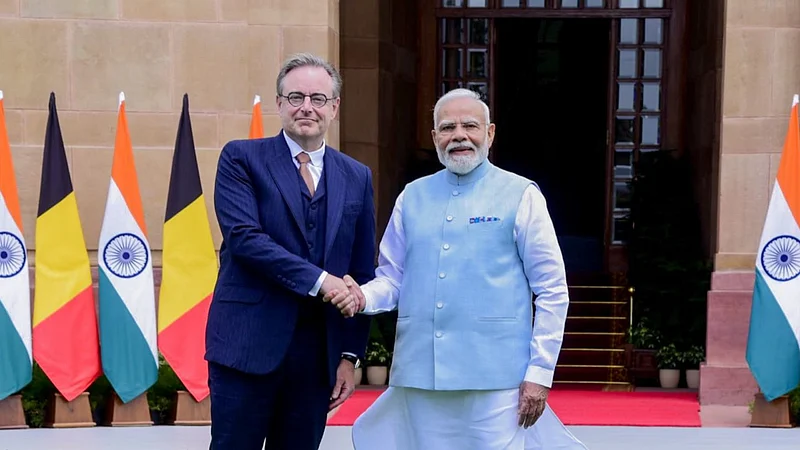
Prime Minister Narendra Modi announced the trade target after holding talks with Belgian Prime Minister Bart De Wever in New Delhi. The discussions came against the backdrop of the India-European Union Free Trade Agreement concluded earlier this year, which Modi said had opened new opportunities for economic engagement between India and Belgium.
“Earlier this year, we concluded a historic Free Trade Agreement between India and the European Union. This unprecedented cooperation between two of the world’s largest democratic powers will further strengthen global stability, growth, and shared prosperity,” Modi said.
The bilateral trade between India and Belgium stood at $13.01 billion in 2025-26. Belgium’s foreign direct investment inflows into India were estimated at around $4.2 billion between April 2000 and December 2025.
New Mechanisms to Boost Trade and Investment
India and Belgium have agreed to establish an Investment Fast-Track Mechanism aimed at facilitating investments by Belgian companies in India. The two sides will also make the India-Belgium Business Forum a regular platform for promoting commercial engagement.
The leaders further agreed to improve coordination between financial, fintech and regulatory institutions in both countries.
Modi said these measures would help create the conditions required to achieve the goal of doubling bilateral trade within five years.
The two countries also reaffirmed the importance of timely implementation of the India-EU FTA and agreed to strengthen cooperation through the India-EU Trade and Technology Council.
Defence Ties Set for Expansion
Defence and security emerged as another important component of the discussions.
India and Belgium signed a Letter of Intent between their respective defence ministries to establish a framework for regular exchanges, staff-level talks, education and training, research and defence-industrial partnerships.
According to Modi, the two countries will expand military exchanges and training, while greater engagement between their defence industries could open opportunities for co-development and co-production.
Belgium has also appointed a Defence Attaché in New Delhi, while India plans to appoint a resident Defence Attaché in Brussels. The move is expected to strengthen institutional communication and defence cooperation between the two countries.
The security partnership was also expanded through an agreement between India’s Central Bureau of Investigation and Belgium’s Federal Police. The MoU covers cooperation against transnational organised crime and cybercrime, including information sharing, capacity building and efforts to trace fugitives.
Renewable Energy Partnership Gets Broader
Green energy cooperation is another major area identified by India and Belgium.
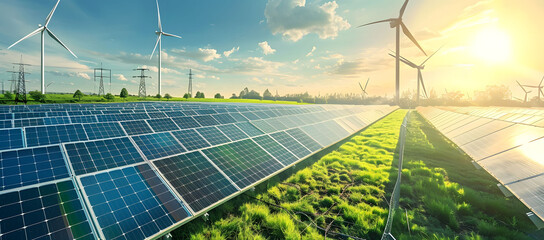
The two countries renewed their memorandum of understanding on renewable energy cooperation, broadening the areas covered to include green hydrogen, solar power, energy storage, offshore wind, bio-energy, small hydropower and pumped-storage projects.
The expanded framework could provide greater scope for technology partnerships and investment across multiple segments of the clean-energy value chain.
India and Belgium also agreed to cooperate more closely on critical minerals, particularly in areas such as processing and recycling. Access to critical minerals has become increasingly important for clean-energy technologies, electric mobility and advanced manufacturing.
Belgium’s imec to Engage With India’s Semiconductor Ecosystem
Semiconductors also featured prominently in the bilateral discussions.
India and Belgium backed increased engagement between India’s growing semiconductor ecosystem and Belgium-based imec, with the objective of developing deeper partnerships in advanced semiconductor technologies.
The cooperation could strengthen links between Indian companies and research and technology institutions in Belgium, particularly as India seeks to develop domestic semiconductor capabilities and attract advanced technology investments.
Ports, Logistics and Offshore Wind
India and Belgium also agreed to expand cooperation in ports, logistics, connectivity, dredging and offshore wind infrastructure.
The two leaders welcomed plans for collaboration between Belgium’s Antwerp/Flanders Port Training Centre and India’s Jawaharlal Nehru Port Authority. Such cooperation could support knowledge-sharing and capacity building in port operations and maritime infrastructure.
The emphasis on ports and logistics also aligns with India’s broader efforts to strengthen its trade infrastructure and improve connectivity with global markets.
Greater Mobility for Students and Professionals
The two countries agreed to strengthen visa-processing capacity and facilitate the movement of professionals, students, researchers and business travellers.
India and Belgium also agreed to work towards a Migration and Mobility Partnership Agreement, which could provide a broader framework for managing mobility between the two countries.
The India-Belgium-Luxembourg Economic Union Joint Economic Commission will continue to serve as a key institutional mechanism for bilateral economic cooperation, with its 19th session expected later this year.
Partnership Expands Beyond Trade
The latest agreements indicate that India-Belgium relations are increasingly extending beyond conventional trade and investment into strategic sectors such as defence technology, clean energy, critical minerals, semiconductors and maritime infrastructure.
With bilateral trade targeted to double over the next five years and the India-EU FTA creating a broader economic framework, both countries are seeking to build stronger commercial and strategic links.
For India, Belgium’s position within Europe’s industrial, logistics, technology and investment ecosystem offers opportunities to strengthen access to advanced technologies and European markets. For Belgium, India’s expanding economy and large-scale investment requirements create opportunities across infrastructure, technology, energy and manufacturing.
The focus on green energy, semiconductors and critical minerals also reflects the growing importance of resilient technology and supply chains in the evolving global economy.
Disclaimer: This report has been editorially prepared using publicly available information and official statements. Readers are advised to refer to official announcements for further details.
Author

About the Author