Telangana Deputy Chief Minister Mallu Bhatti Vikramarka presented the state’s clean-energy ambitions during his ongoing visit to the United States, highlighting plans to transform Telangana into a global clean-energy hub while contributing to India’s target of achieving 500 GW of non-fossil fuel capacity by 2030.
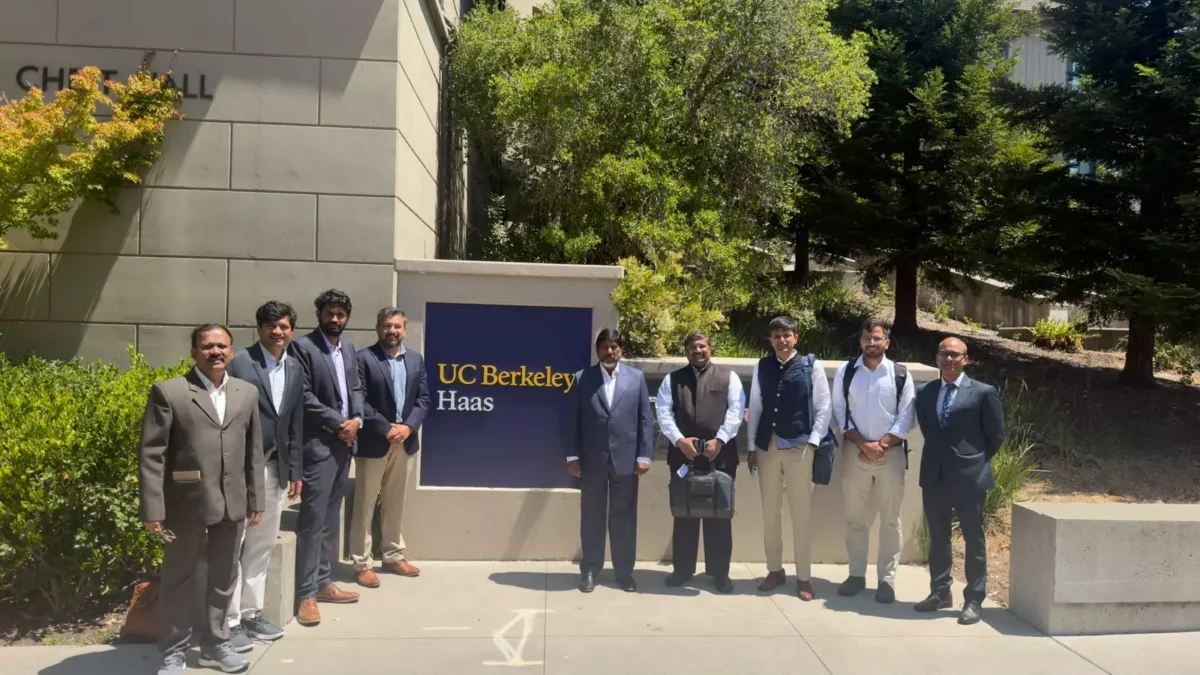
Bhatti visited the India Energy and Climate Centre (IECC) at the Goldman School of Public Policy, University of California, Berkeley, where officials, researchers and energy experts discussed India’s clean-energy transition and Telangana’s renewable-energy strategy.
Focus on India’s 500 GW Clean Energy Target
The discussions focused on the challenges and opportunities associated with India’s transition towards a low-carbon energy system.
Participants examined the rapid decline in the cost of clean-energy technologies and discussed how India can accelerate renewable-energy deployment while maintaining grid reliability and economic competitiveness.
Key areas discussed included:
- Renewable energy expansion
- Grid modernisation
- Industrial decarbonisation
- Advanced battery energy storage
- Clean-energy technologies
- Climate resilience
- Equitable energy transition
The discussions also explored how technological innovation and policy support can help India meet its long-term climate and energy objectives.
Telangana Highlights Renewable Energy Strategy
Bhatti outlined Telangana’s approach to renewable-energy development, highlighting the state’s emphasis on transparent green-energy policies, investment promotion and rapid expansion of solar and other renewable-energy capacity.
The Deputy Chief Minister said Telangana is seeking to create an ecosystem capable of attracting investments in clean-energy generation as well as clean-technology manufacturing.
The state is positioning renewable energy not only as a tool for reducing emissions but also as an important driver of industrial development and economic growth.
California and Silicon Valley Experience to Support Telangana
During the meeting, Telangana and UC Berkeley agreed to explore opportunities for collaboration by drawing on California’s experience in energy transition and Silicon Valley’s technology ecosystem.
Potential areas of cooperation include research and studies covering:
- Electricity systems
- Clean transportation
- Climate resilience
- Renewable-energy technologies
- Energy-system modernisation
The two sides will also explore training programmes for policymakers, which could help Telangana strengthen its capacity to design and implement clean-energy policies.
Battery Storage and Grid Modernisation
Advanced battery storage emerged as an important component of the discussions.
As Telangana and India expand solar and other renewable-energy sources, energy storage will become increasingly important for balancing intermittent generation and ensuring reliable electricity supply.
Grid modernisation was therefore highlighted as another key requirement for integrating larger quantities of renewable power into the electricity system.
The discussions also covered industrial decarbonisation, particularly the need to develop technologies and infrastructure that allow industries to reduce emissions while remaining globally competitive.
Women and Farmers in Clean Energy Transition
Bhatti also highlighted Telangana’s efforts to involve women’s self-help groups in rural areas in managing solar-energy projects.
According to him, this approach is intended to combine renewable-energy development with rural livelihood opportunities and women’s economic participation.
The PM-KUSUM scheme was also highlighted for its role in helping farmers access solar energy and reduce their dependence on conventional sources of agricultural power.
The state has also emphasised the availability of 24-hour quality power supply as part of its broader strategy to support households, agriculture and industry.
Clean-Tech Manufacturing Push
Telangana is also seeking to attract investment into clean-technology manufacturing.
The state believes that the combination of renewable-energy resources, reliable electricity supply, industrial infrastructure and technology partnerships can help create a stronger clean-energy manufacturing ecosystem.
Collaboration with institutions such as UC Berkeley could provide access to research, technological expertise and international best practices as Telangana works towards its ambition of becoming a global clean-energy hub.
The engagement in Berkeley marks another step in Telangana’s efforts to connect its renewable-energy ambitions with international research, technology and investment networks.
Author

About the Author