
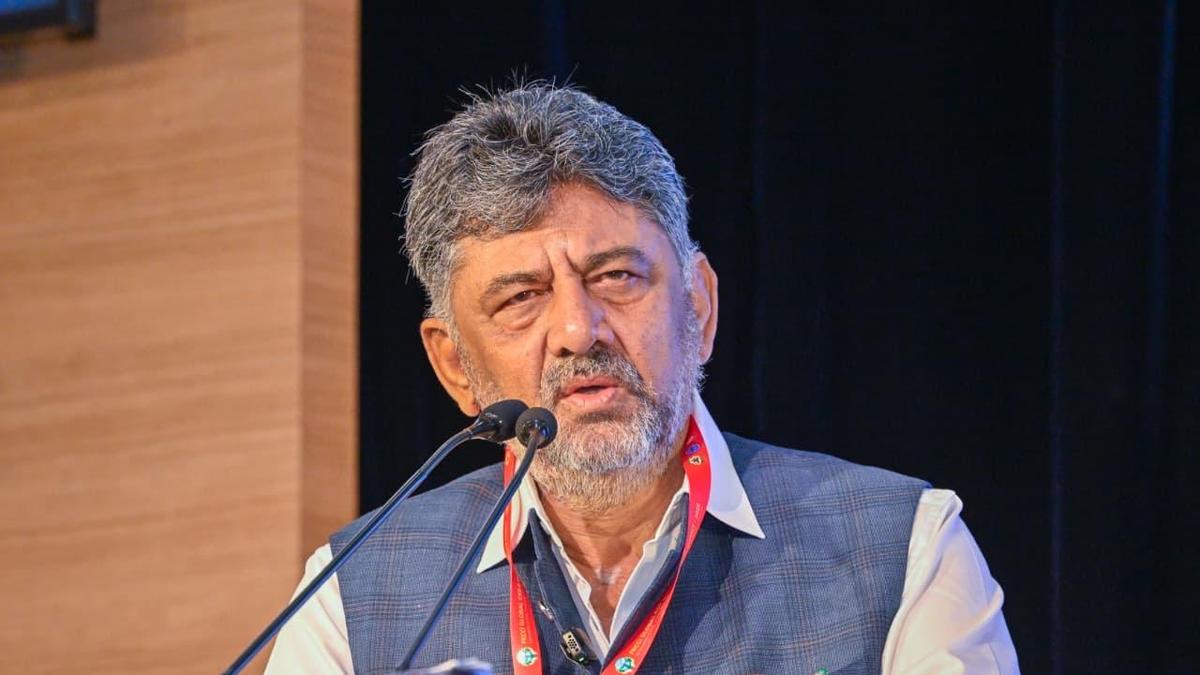
Karnataka Chief Minister D.K. Shivakumar has called on corporates to prioritise Corporate Social Responsibility (CSR) spending on primary education, urging companies to adopt government schools, strengthen educational infrastructure, and invest in improving learning outcomes across the state.
Speaking at the Global CSR and Sustainability Summit 2026, organised by the Federation of Karnataka Chambers of Commerce and Industry (FKCCI) in Bengaluru, the Chief Minister announced that the state government will establish a dedicated monitoring mechanism to track CSR projects and ensure their effective implementation across Karnataka.
Government to Monitor CSR Projects
Highlighting the growing role of corporate participation in development, Shivakumar said Karnataka currently has nearly 10,000 CSR initiatives underway.
To improve transparency, accountability, and project execution, the government plans to create a separate team that will monitor CSR activities across districts and assess their impact on communities.
He stressed that CSR should deliver measurable social outcomes rather than remain limited to financial contributions.
Primary Education Identified as Top Priority
Calling primary education the state’s immediate focus area, the Chief Minister urged industries to actively support government schools.
He appealed to corporates to:
- Adopt government schools
- Upgrade school infrastructure
- Improve classrooms and learning facilities
- Provide skilled professionals and educational support
- Help enhance learning outcomes for students
Referring to companies such as Toyota, he praised existing corporate initiatives in school development and encouraged more businesses to participate.
According to Shivakumar, CSR should not only build physical infrastructure but also strengthen human capital by improving the quality of education.
CSR is an Investment, Not Charity
The Chief Minister said corporate social responsibility should be viewed as a long-term investment in sustainable development rather than a charitable obligation.
He credited former Union Finance Minister Pranab Mukherjee for introducing India’s CSR framework, which has enabled companies to contribute significantly to social development projects across the country.
Karnataka’s Education and Technology Strength
Highlighting Karnataka’s position as an education and innovation hub, Shivakumar said the state has:
- 38 international schools
- 71 medical colleges
- Nearly 13,900 doctors graduating annually
- Around 1 lakh healthcare professionals produced every year
- An information technology sector employing nearly 26 lakh people
He noted that Karnataka’s strong educational ecosystem has played a major role in attracting global investments and establishing Bengaluru as India’s technology capital.
Balanced Regional Development Needed
The Chief Minister also emphasised the need to expand quality educational opportunities beyond Bengaluru.
He said students from rural areas should have access to high-quality schools closer to their homes instead of being forced to migrate to the state capital for better education.
Shivakumar highlighted the contribution of industrial hubs such as Electronics City and International Tech Park Bengaluru (ITPL) in driving Karnataka’s economic growth while acknowledging the role of organisations like FKCCI in supporting the state’s industrial development.
Education Key in the AI Era
Concluding his address, the Chief Minister said emerging technologies such as Artificial Intelligence (AI) are rapidly transforming industries and society.
He stressed that sustained investments in education, skill development, sustainability, and human capital will be essential for maintaining Karnataka’s economic leadership while ensuring inclusive and balanced growth across the state.
Author

About the Author