
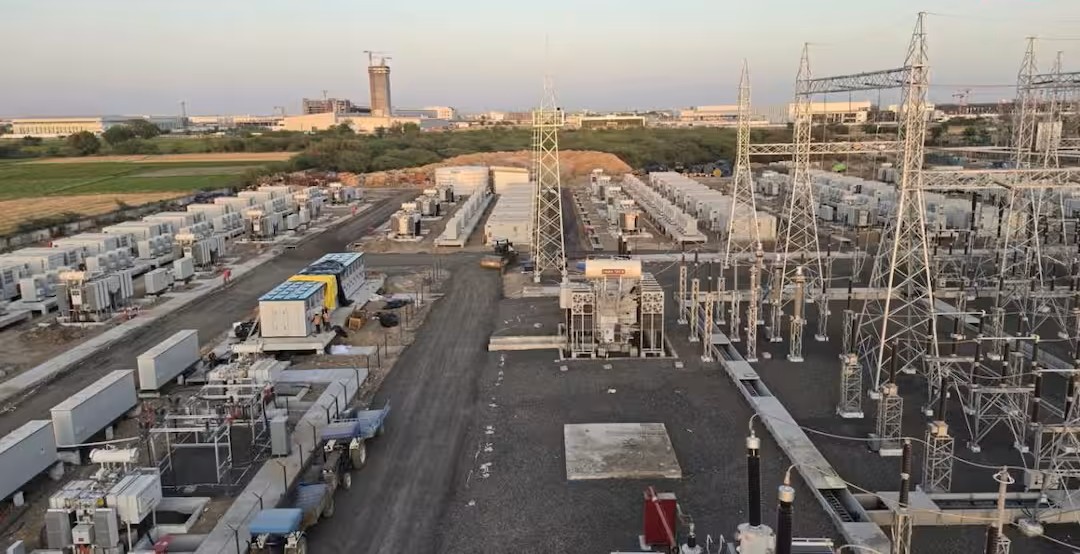
Gujarat has recorded its largest-ever annual reduction in carbon emissions, preventing nearly 49.79 million tonnes of carbon dioxide equivalent (mtCO₂e) from entering the atmosphere during the financial year 2025–26, as the state accelerates its renewable energy transition in line with Prime Minister Narendra Modi’s vision of achieving net zero emissions by 2070.
Under the leadership of Chief Minister Bhupendra Patel, the state has significantly expanded its renewable energy infrastructure, resulting in record levels of green power generation and substantial reductions in greenhouse gas emissions.
According to official data, Gujarat generated a record 67,655 million units of green electricity during the year through solar, wind and other renewable energy sources. The rapid increase in clean energy generation has reduced dependence on coal and other fossil fuels, making renewable energy the primary driver behind the state’s record carbon emission reduction.
Over the past five years, Gujarat has prevented an estimated 179 million tonnes of carbon emissions from being released into the atmosphere through sustained investments in renewable energy, environmentally friendly policies and clean power infrastructure.
With the state estimated to emit around 442 million tonnes of greenhouse gases annually, the cumulative reduction achieved over the last five years is equivalent to nearly 40% of its annual emissions, highlighting Gujarat’s growing role in India’s clean energy transition.
Environmental experts note that expanding renewable energy not only helps combat climate change but also reduces air pollution, improves public health and strengthens long-term energy security. Lower carbon emissions contribute to better air quality while reducing the risks associated with global warming, including extreme heat, erratic rainfall, floods and droughts.
The state government has attributed this progress to a series of policy initiatives aimed at accelerating renewable energy deployment. These include the Integrated Renewable Energy Policy 2026, Green Hydrogen Policy, and Gujarat Pumped Storage Policy, which are designed to promote investment in clean energy technologies and support long-term sustainable development.
Government agencies including Gujarat Urja Vikas Nigam Limited (GUVNL), the Gujarat Energy Development Agency (GEDA) and Gujarat Power Corporation Limited (GPCL) have played a key role in implementing these initiatives under the supervision of the state’s Energy Department.
As a result, the share of renewable energy in Gujarat’s electricity generation mix has increased significantly, contributing to cleaner power production and improved environmental outcomes.
The state has also outlined an ambitious roadmap to develop 100 GW of renewable energy capacity by 2030, reinforcing its position as one of India’s leading renewable energy destinations. The target is expected to support both national energy security and India’s international climate commitments under the Paris Agreement.
Prime Minister Narendra Modi has consistently emphasised that economic growth and environmental protection must progress together, ensuring sustainable development for future generations. Gujarat’s latest achievements are being positioned as a practical example of this approach, combining industrial development with large-scale investments in clean energy.
With continued expansion of solar, wind, green hydrogen and energy storage projects, Gujarat is emerging as a model for sustainable growth and is expected to play a pivotal role in helping India achieve its long-term net zero emissions target by 2070.
Disclaimer: This report has been editorially prepared using publicly available information and official statements. Readers are advised to refer to official government announcements for further details.
Author

About the Author