New Delhi, 5 July: Imagine a day without electricity. No fans, no lights, no mobile phones, no internet, no trains, and no hospitals. Energy powers almost every aspect of modern life. But have you ever wondered where this energy comes from and whether it can be produced without harming the environment?
This is where clean energy comes in.
What is Clean Energy?
Clean energy refers to energy produced from sources that generate little or no pollution and emit very low levels of greenhouse gases. Unlike coal, oil, and natural gas, which release carbon dioxide (CO₂) when burned, clean energy comes from natural resources that are either renewable or have a much lower environmental impact.
Simply put, clean energy is energy that meets today’s needs without damaging the planet for future generations.
Why is Clean Energy Important?
For decades, countries have relied heavily on fossil fuels such as coal and petroleum to produce electricity and run industries. While these fuels have powered economic growth, they have also contributed to:
- Air pollution
- Climate change
- Rising temperatures
- Health problems
- Dependence on imported fuels
Clean energy offers a sustainable alternative by reducing pollution while ensuring a reliable energy supply.
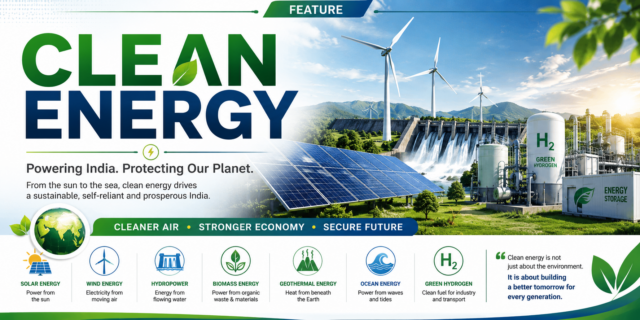
Types of Clean Energy
☀️ 1. Solar Energy
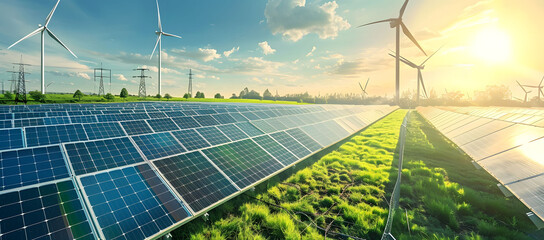
Solar energy is produced by capturing sunlight using solar panels.
How it works:
Solar panels convert sunlight directly into electricity.
Where it is used:
- Homes
- Schools
- Offices
- Farms
- Streetlights
- Railway stations
Advantages:
- No fuel cost
- Low maintenance
- Pollution-free
- Ideal for sunny countries like India
💨 2. Wind Energy
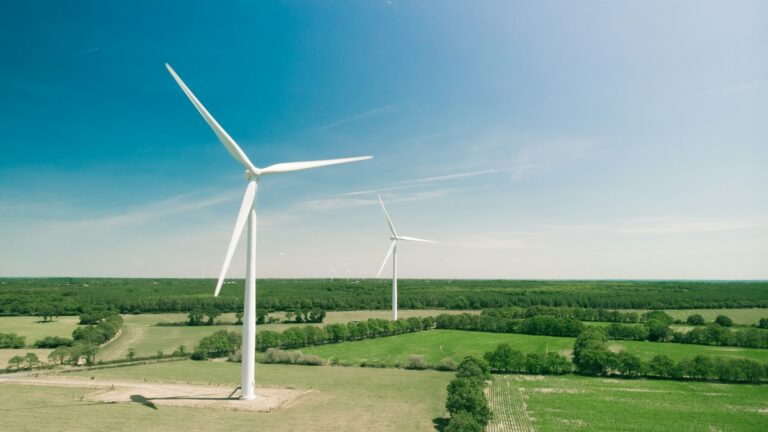
Wind turbines use the force of moving air to generate electricity.
How it works:
The wind turns large blades connected to a generator, producing electricity.
Where it is used:
- Coastal regions
- Open plains
- Mountain areas
India has major wind farms in Tamil Nadu, Gujarat, Karnataka, Maharashtra, and Rajasthan.
💧 3. Hydropower
Hydropower generates electricity using flowing or falling water.
How it works:
Water released from dams spins turbines that generate electricity.
Examples:
- Bhakra Nangal Dam
- Tehri Dam
- Sardar Sarovar Dam
Hydropower is one of the oldest and most widely used renewable energy sources.
🌱 4. Biomass Energy
Biomass energy is produced from organic materials such as:
- Crop residue
- Animal waste
- Wood waste
- Food waste
These materials are converted into electricity, heat, or biofuels.
Benefits:
- Reduces agricultural waste
- Provides additional income to farmers
- Produces renewable energy
🌍 5. Geothermal Energy
The Earth contains enormous amounts of heat beneath its surface.
Geothermal plants use this underground heat to produce electricity or provide heating.
Although widely used in countries like Iceland, geothermal energy is still at an early stage in India.
🌊 6. Ocean Energy
The movement of sea waves and tides can also generate electricity.
There are two major forms:
- Tidal Energy
- Wave Energy
While still developing, ocean energy has enormous long-term potential for coastal countries.
⚡ 7. Green Hydrogen
Green hydrogen is emerging as one of the most promising clean fuels of the future.
It is produced by splitting water into hydrogen and oxygen using electricity generated from renewable sources like solar and wind.
It can be used in:
- Heavy industries
- Trucks
- Ships
- Aviation
- Steel production
- Fertilizer manufacturing
India has launched the National Green Hydrogen Mission to become a global leader in this technology.
How Does Clean Energy Help Ordinary People?
Clean energy offers benefits that go beyond environmental protection.
- Lower electricity bills through rooftop solar systems
- Cleaner air and improved public health
- Reduced dependence on imported oil and gas
- More employment in manufacturing, installation, maintenance, and engineering
- Greater energy security for the country
What Can We Do?
Every citizen can contribute by:
- Using LED bulbs
- Conserving electricity
- Installing rooftop solar where feasible
- Choosing energy-efficient appliances
- Supporting electric mobility
- Planting trees and protecting natural resources
Small actions, when adopted by millions of people, create a lasting impact.
India’s Clean Energy Journey
India has emerged as one of the world’s fastest-growing renewable energy markets. The country is investing heavily in:
- Solar parks
- Wind farms
- Battery energy storage
- Green hydrogen
- Electric vehicles
- Smart electricity grids
These initiatives are helping India reduce emissions while ensuring reliable and affordable energy for its growing population.
Conclusion
Clean energy is not just about protecting nature—it is about creating healthier communities, reducing energy costs, strengthening the economy, and securing a sustainable future for generations to come.
Whether it is a solar panel on a village rooftop, a wind turbine powering a city, or a hydroelectric dam supplying electricity to millions, every unit of clean energy brings us one step closer to a greener and more resilient India.
The future belongs to clean energy. By embracing it today, we are investing in a cleaner environment, a stronger economy, and a brighter tomorrow.
Author
About the Author