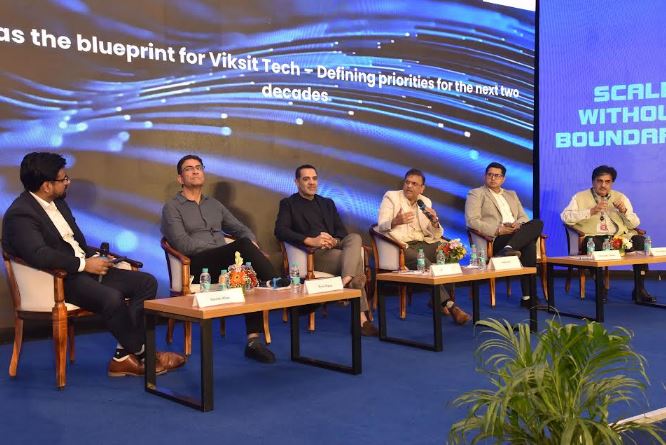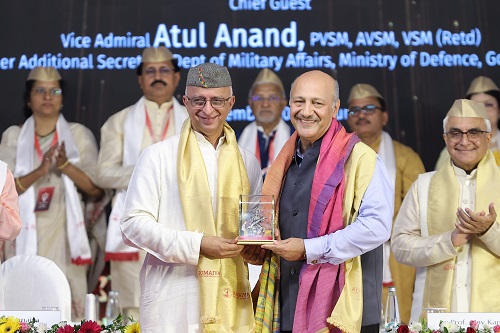

The Ministry of New and Renewable Energy (MNRE) held the fifth roadshow for the Bharat Renewable Energy Summit and Expo 2026 in Bengaluru, bringing together government officials and industry stakeholders as Karnataka stepped up efforts to attract global investment into renewable energy, clean mobility, energy storage and green manufacturing.
Karnataka Energy Minister K J George used the occasion to invite global investors, renewable energy developers, manufacturers and technology companies to partner with the state in accelerating its clean-energy expansion.
The roadshow comes as India advances towards its national ambition of achieving 500 GW of non-fossil fuel-based power capacity by 2030, with Karnataka positioning itself as an important contributor to the country’s renewable energy and clean-technology ecosystem.
Karnataka Highlights Investment Opportunities Across Clean Energy
George said Karnataka remains committed to India’s clean-energy transition and continues to offer opportunities across multiple segments of the renewable energy value chain.
These include solar-wind hybrid projects, rooftop solar, electric mobility, renewable energy manufacturing and battery energy storage systems (BESS).
“Karnataka is open to clean energy investments and partnerships,” George said, highlighting the Bharat Renewable Energy Summit and Expo as an opportunity to showcase the state’s capabilities and investment potential to international stakeholders.
He invited investors, innovators, industry leaders and entrepreneurs to explore opportunities in Karnataka and collaborate with the state on developing a greener and more energy-secure economy.
The state’s established industrial ecosystem, renewable energy resources and focus on emerging clean technologies are being positioned as key advantages as global capital increasingly moves towards low-carbon infrastructure.
Karnataka Targets 10 GW Additional Capacity by 2027
Gaurav Gupta, Additional Chief Secretary of the Energy Department, Government of Karnataka, outlined the state’s focus on policy implementation, land leasing, transmission infrastructure and stronger engagement with industry.
Under the Integrated Renewable Energy Policy 2025, Karnataka aims to add 10 GW of renewable energy capacity by 2027, while seeking to tap into an estimated renewable energy potential of 155 GW.
The state is also promoting Green Energy Corridors and Renewable Energy Parks through public-private partnership models.
These initiatives are intended to support the development of infrastructure required to integrate increasing volumes of renewable electricity into the power system while creating opportunities for private investment.
₹7.5 Lakh Crore Investment and 20 Lakh Jobs Target
Karnataka is also linking its clean-energy ambitions with its wider industrial development strategy.
According to Gupta, the state’s Industrial Policy 2025–30 incorporates an investment target of approximately ₹7.5 lakh crore and a goal of generating around 20 lakh jobs.
The policy framework is expected to support investment across manufacturing and other industrial sectors, with renewable energy and associated technologies forming an important part of the state’s broader industrial transition.
The government is simultaneously seeking to strengthen infrastructure and policy conditions required to attract businesses involved in renewable generation, equipment manufacturing and clean technologies.
Energy Conservation and Clean Mobility Policies
Karnataka’s clean-energy strategy extends beyond renewable generation.
The state’s Energy Conservation Policy has set a target of achieving 744 million units (MU) of energy savings by FY27, according to Gupta.
At the same time, the Clean Mobility Policy 2025–30 is aimed at catalysing approximately ₹50,000 crore in investments.
The policy is expected to strengthen Karnataka’s position in electric mobility and related manufacturing, while supporting the state’s broader objective of reducing emissions from transportation.
The combination of renewable power, energy efficiency, energy storage and clean mobility is intended to create an integrated clean-energy ecosystem rather than treating individual technologies as standalone sectors.
MNRE Stresses Policy Certainty and Manufacturing Strength
Santosh Kumar Sarangi, Secretary at the Ministry of New and Renewable Energy, said India’s energy transition was entering a decisive phase, with the focus increasingly shifting towards building a resilient, integrated and investment-ready ecosystem.
He highlighted the importance of policy certainty and India’s expanding manufacturing capabilities across the renewable energy value chain.
According to Sarangi, these factors provide a foundation for continued investment as India scales up its clean-energy infrastructure.
He also expressed confidence that the country could narrow the gap between the availability of domestic capital and the international financing required to support India’s green-energy transition.
Industry Participation Seen as Critical
The Bengaluru roadshow brought government and industry representatives together to highlight investment opportunities and discuss the requirements for scaling renewable energy deployment.
Akilur Rahman, Convenor of the CII Karnataka Energy Transition Panel 2024–25 and Chief Technology Officer at Hitachi Energy, was among the industry representatives participating in the event.
The participation of industry stakeholders reflects the increasing role of private capital, technology providers and manufacturers in India’s renewable energy expansion.
Large-scale deployment will require investment not only in generation capacity but also in transmission networks, storage systems, manufacturing facilities and supporting infrastructure.
Bengaluru Roadshow Builds Momentum Ahead of Bharat RE Summit
The Bengaluru event is the fifth roadshow organised by MNRE ahead of the Bharat Renewable Energy Summit and Expo 2026.
The initiative is intended to build awareness around India’s renewable energy opportunities and connect policymakers with investors, developers, manufacturers and technology companies.
For Karnataka, the event provides an international platform to present its renewable energy potential and policy initiatives at a time when the state is seeking to attract significant investment into clean energy and associated industries.
The state’s focus on hybrid renewable projects, rooftop solar, BESS, electric mobility, Green Energy Corridors and renewable energy manufacturing reflects the increasingly diversified nature of India’s energy transition.
As India works towards its 2030 non-fossil capacity objective, Karnataka’s policy push and investment targets could make the state an important centre for renewable generation, clean-energy manufacturing and emerging technologies.
Disclaimer: This report has been editorially prepared using publicly available information and official statements. Readers are advised to refer to official announcements for further details.
Author

About the Author