The Union Ministry of Education has organised a National Corporate Social Responsibility (CSR) Meet for School Education in Gurugram, Haryana, to strengthen partnerships between corporate organisations, state governments and implementing agencies for improving government and government-aided schools.
The event was organised on October 31, 2026, by the Department of School Education and Literacy (DoSEL) through its Vidyanjali school volunteer programme. It aimed to create stronger coordination between the Centre, corporate organisations, States and Union Territories, and implementation partners to channel CSR resources towards identified requirements in school education.
The meeting brought together corporate representatives, State Nodal Officers, ministry officials, the Programme Management Unit (PMU) and the National Informatics Centre (NIC). Discussions focused on identifying school-level requirements, building partnerships and exploring projects through which companies can contribute to improving educational infrastructure and learning environments.
CSR-State Interaction Focuses on Matching Corporate Support with School Needs
A key component of the meeting was the CSR-State Interaction, which provided a platform for corporate organisations and state representatives to discuss potential collaborations.
The interaction was designed to facilitate direct engagement between CSR organisations and state authorities, helping identify projects based on requirements already highlighted by schools. The approach seeks to connect available corporate resources with specific needs rather than relying solely on independently selected projects.
The participation of the Programme Management Unit and the National Informatics Centre also brought together stakeholders involved in the implementation and technology framework of Vidyanjali.
States Share Experiences Under Vidyanjali
Representatives from several states and Union Territories presented their experiences and initiatives under the programme.
Andhra Pradesh shared its experience in implementing Vidyanjali, while Karnataka presented its work on the adoption of schools. Mizoram highlighted the role of community participation in school development, and Delhi showcased innovations and related activities undertaken through the initiative.
These presentations provided an opportunity for states to exchange approaches to community involvement, school adoption and the use of structured partnerships to improve educational facilities.
NGOs and Implementation Agencies Highlight Ground-Level Experiences
Implementation agencies, including ChildFund India, SARD India, Inspiring Seniors Foundation and ETI Foundation, also participated in the meeting.
Their representatives shared experiences and perspectives on facilitating CSR engagement and supporting school development through partnerships. Such agencies can play an important role in connecting corporate contributors with schools and supporting the implementation of projects on the ground.
Representatives from the State Bank of India (SBI) and Bharti Airtel also participated in technical sessions, presenting their respective experiences and initiatives in supporting school education.
Their presentations highlighted how corporate participation can help strengthen school resources and create better learning environments.
How the Vidyanjali Platform Connects Schools with CSR Partners
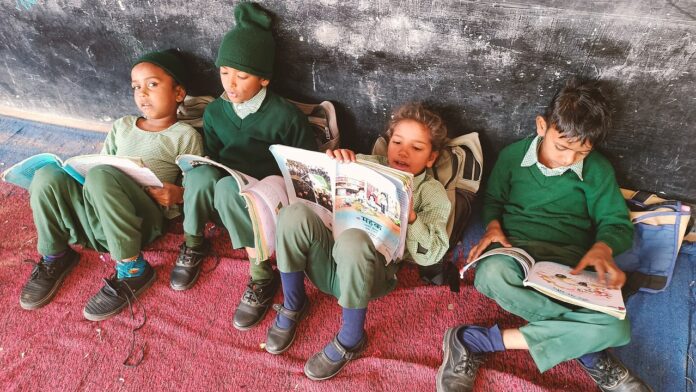
Vidyanjali is an initiative of the Department of School Education and Literacy designed to strengthen government and government-aided schools through structured community and private-sector participation.
The digital platform connects schools with volunteers, organisations and CSR partners, allowing contributions in the form of services, activities and physical assets. Its framework includes two major components: the CSR Module and the Adopt-a-School Module.
Through these mechanisms, organisations can identify school requirements and contribute towards addressing them. The platform is intended to provide a structured channel for corporate and community participation in school development.
The model also allows schools to communicate their requirements while giving potential contributors an opportunity to explore areas where their support can be directed.
Senior Education Ministry Officials Attend the Meeting
Additional Secretary of DoSEL Archana Sharma Awasthi and Economic Advisor A. Srija attended the meeting along with other senior officials of the Ministry of Education.
Their participation reflected the ministry’s focus on strengthening coordination between government institutions, corporate organisations and implementation agencies to expand support for school education.
The meeting forms part of the broader effort to encourage partnerships beyond conventional government funding and bring additional resources, expertise and community participation into the school education system.
Strengthening Public-Private Collaboration in School Education
The National CSR Meet provided a platform for companies, state governments and implementation partners to discuss ways of making CSR participation more structured and responsive to school requirements.
By using Vidyanjali as a connecting platform, the Ministry of Education aims to facilitate collaboration that can support school infrastructure, educational resources and improved learning environments.
The discussions in Gurugram highlighted the role of corporate organisations, public institutions and community-based agencies in supporting government schools. The effectiveness of these partnerships will depend on how discussions translate into specific projects, contributions and sustained support for schools across states and Union Territories.
Disclaimer: This report has been editorially prepared using publicly available information and official statements. Readers are advised to refer to official announcements for further details.
Author

About the Author