Brazil has offered to deepen cooperation with India in the green energy sector, citing decades of experience in developing renewable and alternative energy programmes and expressing willingness to support India’s ongoing transition towards cleaner sources of energy.
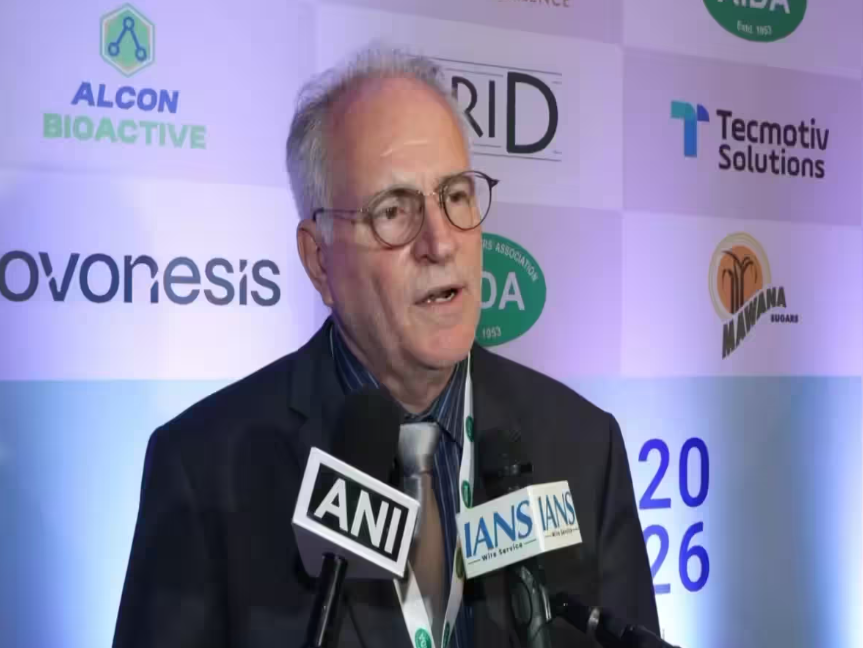
Roberto Carlos Razera Papa, Agricultural Attaché at the Embassy of Brazil in India, said on Wednesday that Brazil was keen to work with India as the country expands its green energy ecosystem. Speaking to the media on the sidelines of an AIDA event on clean mobility, Razera said India’s energy transition could create opportunities for both countries to exchange expertise and develop solutions that combine environmental sustainability with economic and social development.
“We are more than happy to cooperate with this moment of transition of India from the regular energy to green energy,” Razera said.
Brazil Points to Long Experience in Green Energy
Razera highlighted Brazil’s experience in the sector, noting that the country began developing its green energy programme in the 1970s and has continued to expand and refine its approach over the decades.
He said India and Brazil could cooperate by sharing successful practices and developing approaches that ensure the transition to cleaner energy delivers benefits beyond emissions reduction.
“The most important point in this question… is that this development should be based on good practices and also in a sustainable way,” he said.
According to Razera, the focus should be on ensuring that green energy development supports wider economic and social objectives. He also pointed to energy as an important subject for discussion within the BRICS grouping, where India and Brazil are key members.
The potential for greater cooperation comes as India seeks to diversify its clean-energy and clean-mobility options while simultaneously strengthening domestic energy security.
India Seeks a Multi-Technology Clean Mobility Strategy
Rajnath Ram, Advisor at NITI Aayog, said India’s transition to cleaner mobility would not depend on a single technology. Instead, the country would need to develop a portfolio that includes electric vehicles, biofuels, compressed biogas (CBG), compressed natural gas (CNG) and other fuel technologies suited to different applications.
“India’s mobility financing is not just a choice between the electrification and biofuel or something else, it is about combination of portfolio of the clean technology that maximizes emission reduction, energy security and the rural livelihood,” Ram said.
His comments underline India’s effort to approach decarbonisation through multiple pathways, with the choice of technology depending on factors such as vehicle type, operating conditions, infrastructure availability, energy requirements and economic viability.
The strategy also reflects the broader challenge of reducing India’s dependence on imported fossil fuels while ensuring that the transition creates opportunities for domestic industries and rural communities.
Mobility Demand Expected to Rise Through 2047
Ram said the transport sector currently accounts for almost 20 per cent of India’s final energy demand and around 10 per cent of the country’s greenhouse gas emissions.
With mobility demand expected to increase significantly through 2047, the scale of investment required to transform the sector is likely to be substantial. Ram estimated that India would need more than USD 4 trillion in investment to build the infrastructure required to support a net-zero transition by 2047 or 2070.
The investment requirement covers the wider infrastructure and technology ecosystem needed to support India’s long-term transition, including cleaner transport, energy systems and associated supply chains.
Ram also stressed that stable and predictable policies would be essential to attract private capital into biofuel projects. While India has expanded ethanol production and other alternative-fuel initiatives, he said supply-chain infrastructure would need to improve further to support production at scale.
Reliable feedstock availability, transportation networks, processing capacity and distribution infrastructure will therefore remain important components of India’s clean-fuel strategy.
Ethanol Push Seen as Beneficial for Farmers and Economy
Harsh Vardhan Patil said the government’s E20 decision would generate benefits for farmers, consumers and India’s foreign exchange position.
He said the use of ethanol had helped save around Rs 2 lakh crore in foreign exchange over the past two years, while farmers had benefited by approximately Rs 1.65 lakh crore.
The figures highlight the economic dimension of India’s ethanol blending programme, which seeks to reduce the country’s reliance on imported petrol while creating an additional market for agricultural feedstocks.
The programme has also emerged as an important link between India’s energy and rural economies, with the expansion of biofuel production potentially creating additional demand for agricultural products.
India-Brazil Cooperation Could Broaden Clean Energy Partnership
The discussions involving Brazilian and Indian officials point towards an increasingly broad approach to the clean-energy transition, in which electrification, biofuels and other technologies are viewed as complementary rather than competing solutions.
Brazil’s long experience with alternative energy and biofuels could provide opportunities for knowledge-sharing with India, particularly in areas where the two countries face similar challenges involving energy security, agriculture, rural livelihoods and emissions reduction.
For India, expanding cooperation with countries that have developed large-scale clean-energy and biofuel ecosystems could support the development of domestic capabilities while helping accelerate the transition away from fossil fuels.
As India looks towards its longer-term net-zero ambitions, the combination of international cooperation, technology diversification, policy stability and infrastructure investment is expected to remain central to the country’s clean mobility and energy strategy.
Disclaimer: This report has been editorially prepared using publicly available information and official statements. Readers are advised to refer to official announcements for further details.
Author

About the Author