
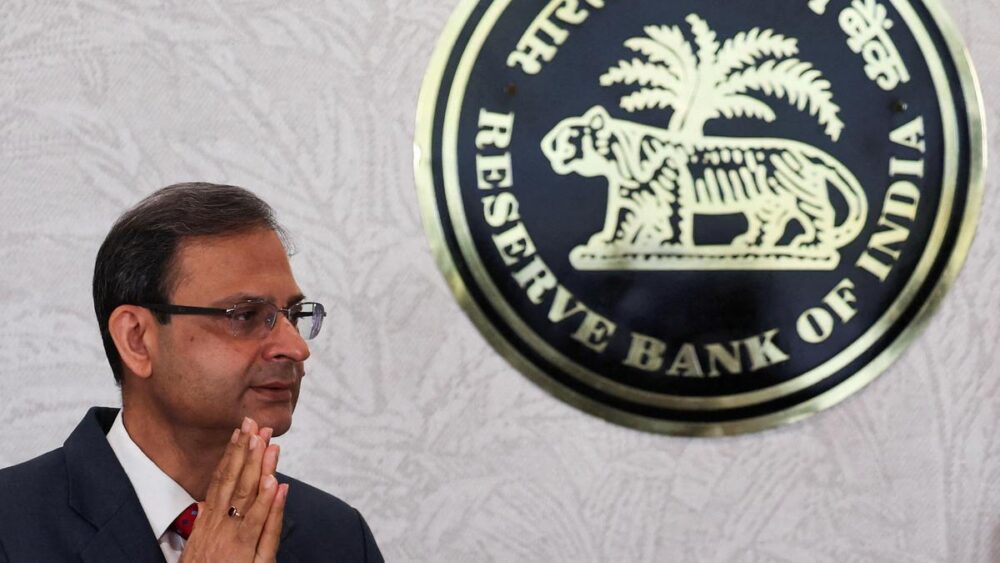
The Reserve Bank of India (RBI) has kept the benchmark repo rate unchanged at 5.25%, with the Monetary Policy Committee (MPC) unanimously voting to maintain the current policy stance amid persistent global uncertainties and geopolitical risks.
Announcing the monetary policy decision, RBI Governor Sanjay Malhotra said the MPC also decided to retain its neutral monetary policy stance, allowing flexibility to respond to evolving domestic and global economic conditions.
Repo Rate Remains Unchanged
The RBI maintained the repo rate at 5.25%, signalling a cautious approach as policymakers balance inflation management with supporting economic growth.
The central bank noted that global uncertainties, particularly geopolitical tensions and disruptions to international trade routes, continue to pose risks to the global economy.
FY27 GDP Growth Forecast Raised
Despite external challenges, the RBI revised its FY2026-27 real GDP growth forecast upward to 6.7%, an increase of 10 basis points from its previous projection.
Governor Malhotra said the Indian economy performed better than expected during the April–June quarter, reflecting resilience in domestic economic activity despite global headwinds.
Inflation Outlook
The RBI expects inflation to peak during the third quarter (Q3) of FY27, mainly due to rising food and fuel prices.
While supply-side pressures eased during June, the central bank noted that price volatility increased from July following the escalation of tensions in West Asia, which has disrupted key global trade routes and impacted commodity markets.
Global Risks and Monsoon Concerns
The RBI highlighted that ongoing geopolitical conflicts in West Asia continue to create uncertainty for the global economy by affecting supply chains and trade.
The central bank also flagged the deficient monsoon as a potential risk to India’s overall economic outlook, noting that weather-related factors could influence agricultural output and food inflation in the coming months.
Despite these challenges, the RBI said India’s economy remains resilient and will continue to be closely monitored as domestic and global conditions evolve.
Author

About the Author