
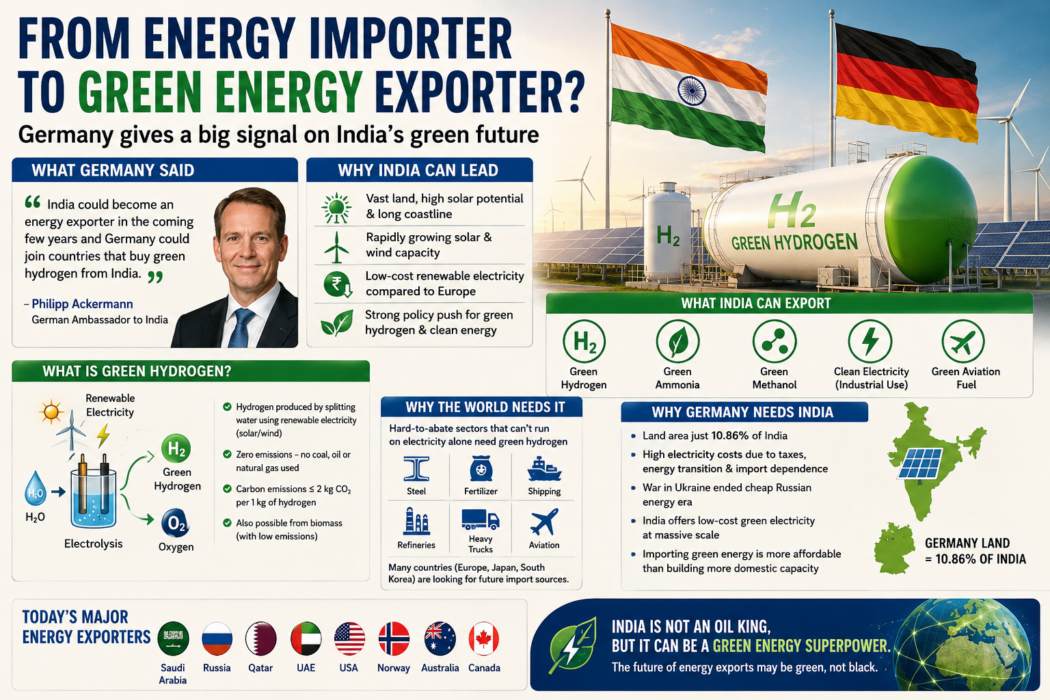
India could emerge as a global exporter of clean energy in the coming years, with Germany potentially becoming one of its major buyers of green hydrogen, according to German Ambassador to India Philipp Ackermann.
Speaking at the Indo-German Industries Dialogue, Ackermann said India’s rapid expansion of solar and wind energy, particularly large-scale renewable projects in Gujarat’s Kutch region, has positioned the country as a strong candidate to supply green hydrogen to international markets.
India’s Green Energy Ambitions
The ambassador highlighted India’s ambitious Green Hydrogen Mission and noted that Germany and India are already collaborating closely on hydrogen technologies.
He also pointed to the partnership between ThyssenKrupp and BHEL to develop green hydrogen-related equipment, calling it an important step in linking electrolysis technology with domestic manufacturing.
Why Green Hydrogen Matters
Green hydrogen is produced by splitting water into hydrogen and oxygen using electricity generated from renewable sources such as solar and wind power. Since the process avoids fossil fuels, it produces minimal carbon emissions and is considered a key clean fuel for hard-to-decarbonise industries.
It is expected to play a major role in sectors such as:
- Steel manufacturing
- Fertiliser production
- Oil refining
- Shipping
- Heavy transport
- Aviation
Germany Looks for Clean Energy Imports
Germany is accelerating its transition away from fossil fuels while facing high electricity costs and limited renewable energy resources compared to India. The country is increasingly looking at imports of green fuels to support its industries and meet climate targets.
India’s abundant solar resources, expanding wind capacity and lower renewable electricity costs could make it a competitive supplier of green hydrogen, green ammonia, green methanol and other clean energy products.
From Energy Importer to Clean Energy Exporter
India remains one of the world’s largest importers of crude oil and natural gas, but the government aims to achieve energy self-reliance by 2047 through large-scale investments in renewable energy and green hydrogen.
While India is unlikely to become an exporter of oil or gas, experts believe it has the potential to become a major exporter of green fuels and clean energy-based industrial products as global demand continues to grow.
Author

About the Author