
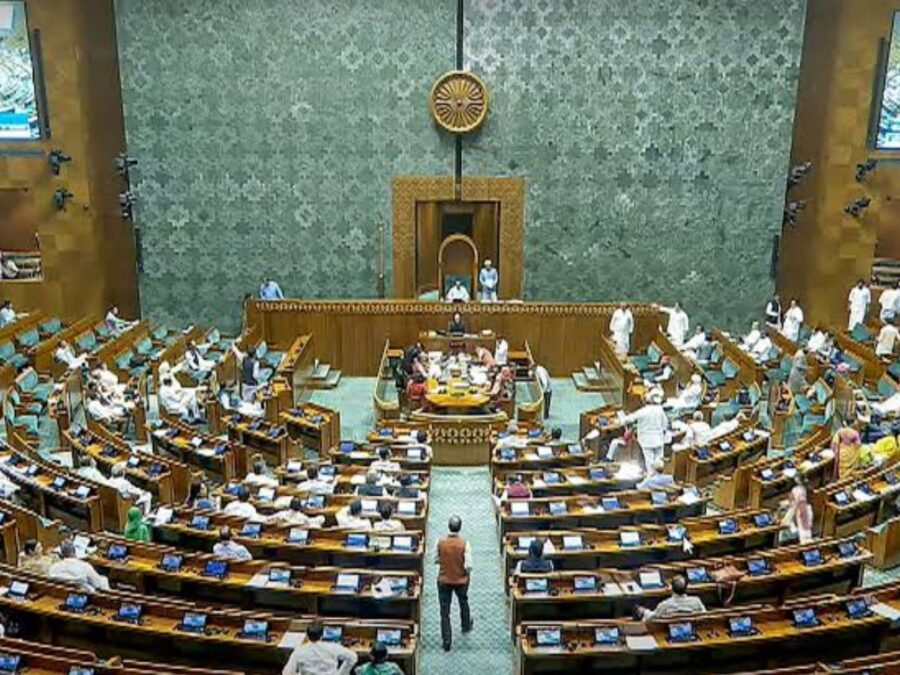
The Monsoon Session of Parliament resumed amid high political drama, with the Foreign Contribution (Regulation) Amendment Bill, 2026 (FCRA Amendment Bill) expected to be taken up for consideration by the Centre. The proposed legislation has emerged as one of the most debated items on the government’s legislative agenda, drawing strong reactions from opposition parties, civil society organisations and non-governmental organisations (NGOs) over its potential impact on foreign-funded institutions operating in India.
The Bill was first introduced during the Budget Session earlier this year but could not be taken up for discussion after repeated disruptions and protests in both Houses of Parliament. With the Monsoon Session now underway, the government is expected to push ahead with the legislation in its existing form.
The proposed amendments seek to modify the Foreign Contribution (Regulation) Act, 2010, the law that regulates how NGOs, trusts, associations and other organisations in India receive and utilise foreign contributions. The FCRA framework is administered by the Ministry of Home Affairs (MHA) and requires eligible organisations to obtain registration before accepting funds from overseas donors.
One of the most significant provisions of the proposed amendment empowers the Central Government to appoint a ‘designated authority’ to assume control of the assets of an NGO if its FCRA registration is cancelled, surrendered or not renewed. The authority would be responsible for managing, supervising and disposing of the organisation’s assets, including properties such as schools, hospitals, office buildings and land acquired through foreign-funded activities.
According to the government, the amendment aims to create a clear statutory mechanism for handling assets after the cancellation of an organisation’s registration, ensuring that they continue to be used in accordance with legal and public interest objectives.
The Bill also seeks to strengthen oversight of foreign funding by introducing clearer compliance requirements for registered organisations. NGOs would be required to specify their purpose, operational area and relationship, if any, with foreign nationals while applying for or renewing registration. The amendments follow recent changes to the FCRA Rules that permit a wider range of faith-based charitable activities while explicitly excluding religious conversion or proselytisation from activities eligible for registration under the law.
The Centre maintains that the proposed legislation is designed to prevent the misuse of foreign contributions for activities that could threaten national security, public order or the sovereignty and integrity of India. Government officials have stated that the amendments are intended to enhance transparency, accountability and regulatory oversight rather than restrict legitimate charitable work.
Defending the proposed legislation, officials have argued that the government already possesses the authority to amend FCRA rules in response to changing security requirements. They have maintained that the Bill merely strengthens the legal framework governing foreign contributions and provides clearly defined timelines, procedures and penalties for violations.
According to government sources, there are currently no plans to introduce any further modifications to the draft before it is presented in Parliament. Officials have indicated that the Bill will be considered in its present form and have rejected allegations that it targets any specific community or religious group. They maintain that enforcement measures would apply only to organisations found violating provisions of the law or misusing foreign funds for unlawful purposes.
However, the proposed amendments have triggered significant criticism from opposition leaders and civil society groups. Several political leaders, including Meghalaya Chief Minister Conrad Sangma, CPI(M) Rajya Sabha leader John Brittas, and Congress General Secretary K.C. Venugopal, have expressed reservations over the legislation, arguing that it grants excessive discretionary powers to the executive.
Critics contend that allowing the government to take control of NGO assets after cancellation of FCRA registration could adversely affect educational institutions, healthcare facilities and welfare programmes operated by charitable organisations. They also argue that many NGOs rely substantially on foreign contributions to implement development projects in sectors such as education, healthcare, disaster relief, rural development and social welfare.
Civil rights organisations have further raised concerns regarding the potential impact of the proposed law on the autonomy of voluntary organisations and have questioned whether the expanded regulatory powers could discourage international philanthropic support for legitimate non-profit initiatives.
Supporters of the Bill, on the other hand, argue that stronger regulation is necessary to ensure transparency in foreign funding and prevent misuse of overseas contributions. They believe enhanced oversight would improve accountability while safeguarding national interests without affecting genuine charitable activities that comply with the law.
The FCRA has remained one of India’s most closely scrutinised regulatory laws governing foreign-funded organisations. Over the years, the Ministry of Home Affairs has cancelled or suspended the registrations of several NGOs for alleged violations of the Act, making the legislation a recurring subject of legal and political debate.
As Parliament prepares to deliberate on the Bill, the discussion is expected to witness intense exchanges between the government and the opposition over balancing national security concerns with the operational independence of civil society organisations. The outcome of the debate could significantly influence the future regulatory framework governing foreign-funded NGOs across the country.
Disclaimer: This report has been editorially prepared using publicly available information and official statements. Readers are advised to refer to the final text of the Bill and official parliamentary proceedings for complete legislative details.
Author

About the Author